
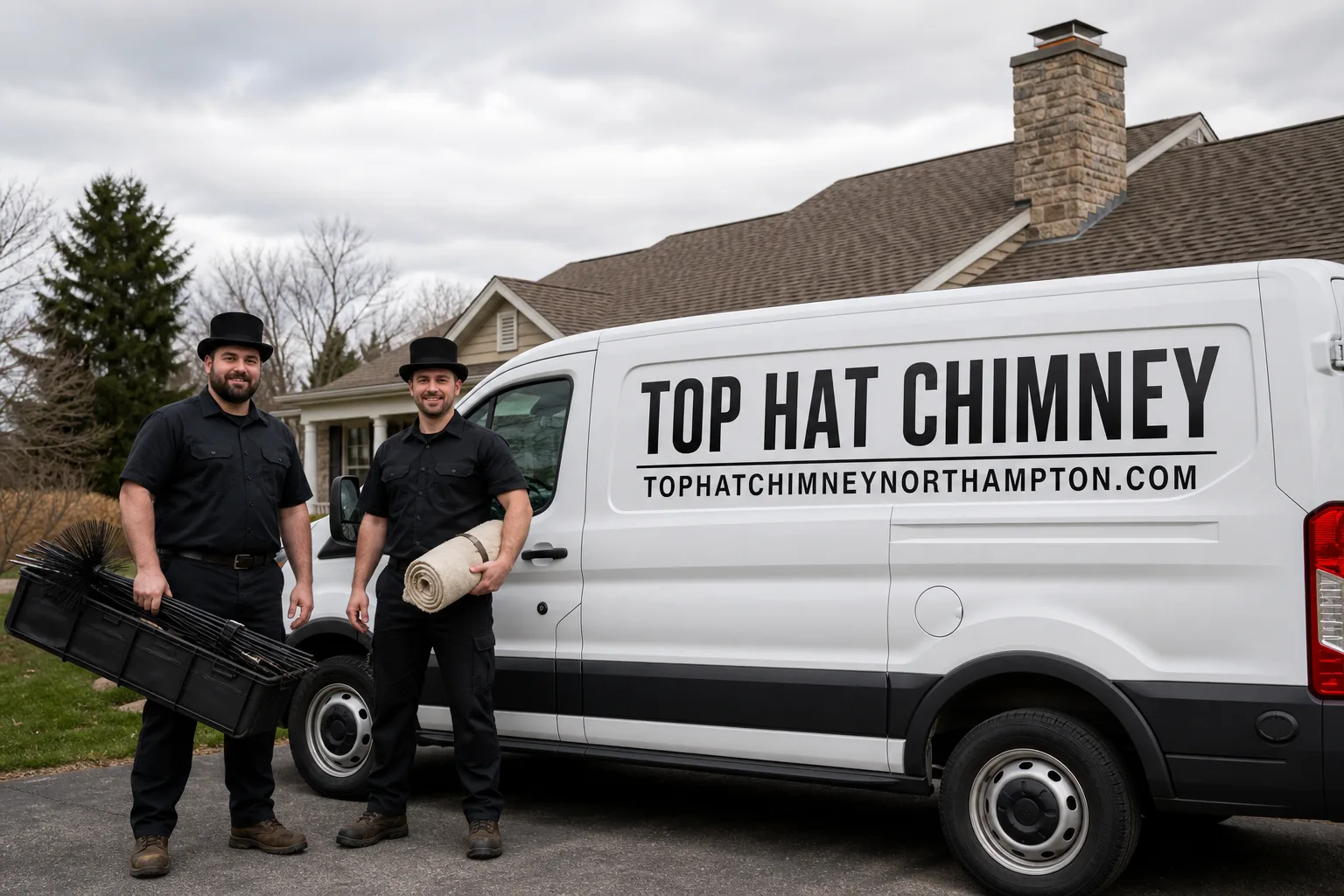
Level 1 sweep and inspection to the NFPA 211 annual standard - flue, crown, cap, and flashing checked and photographed
Chimney sweep logs do not sweep chimneys. They loosen some creosote - which then falls where a brush and vacuum still have to collect it.
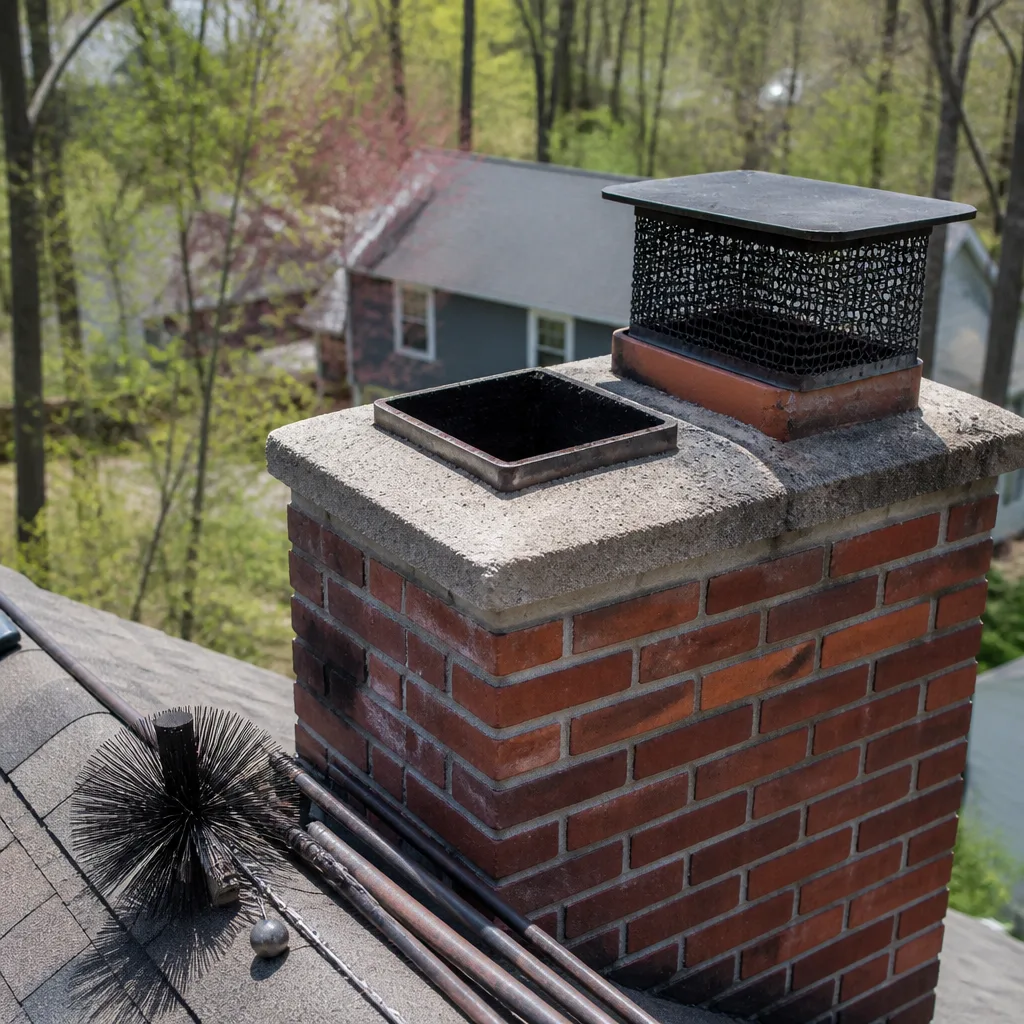
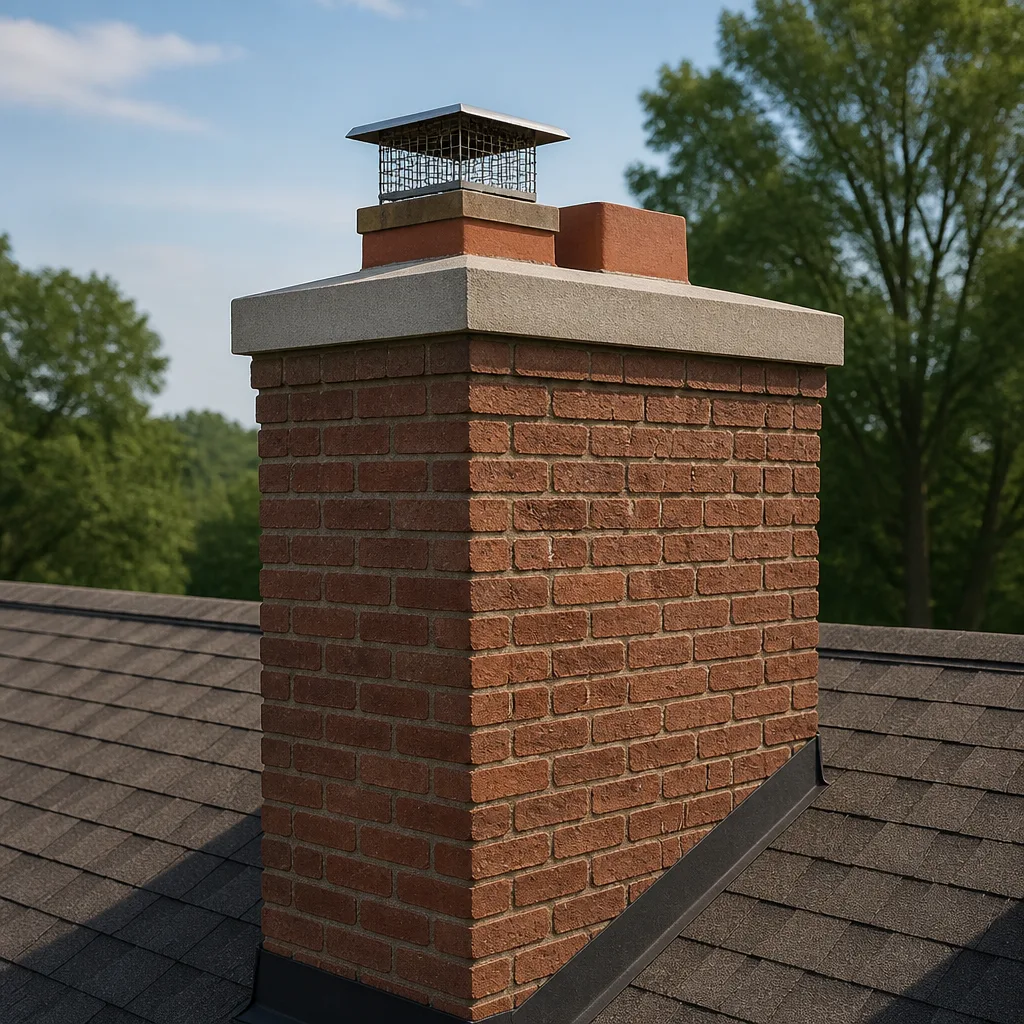
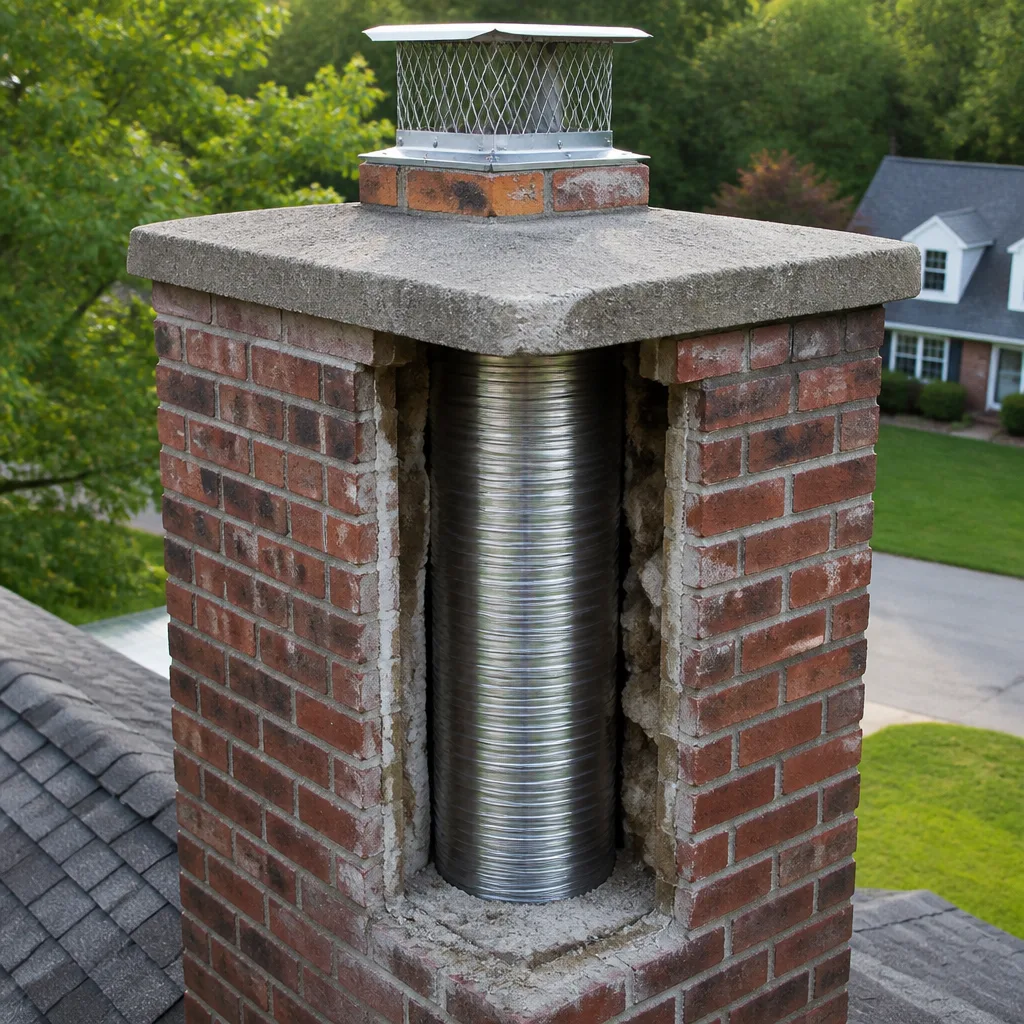
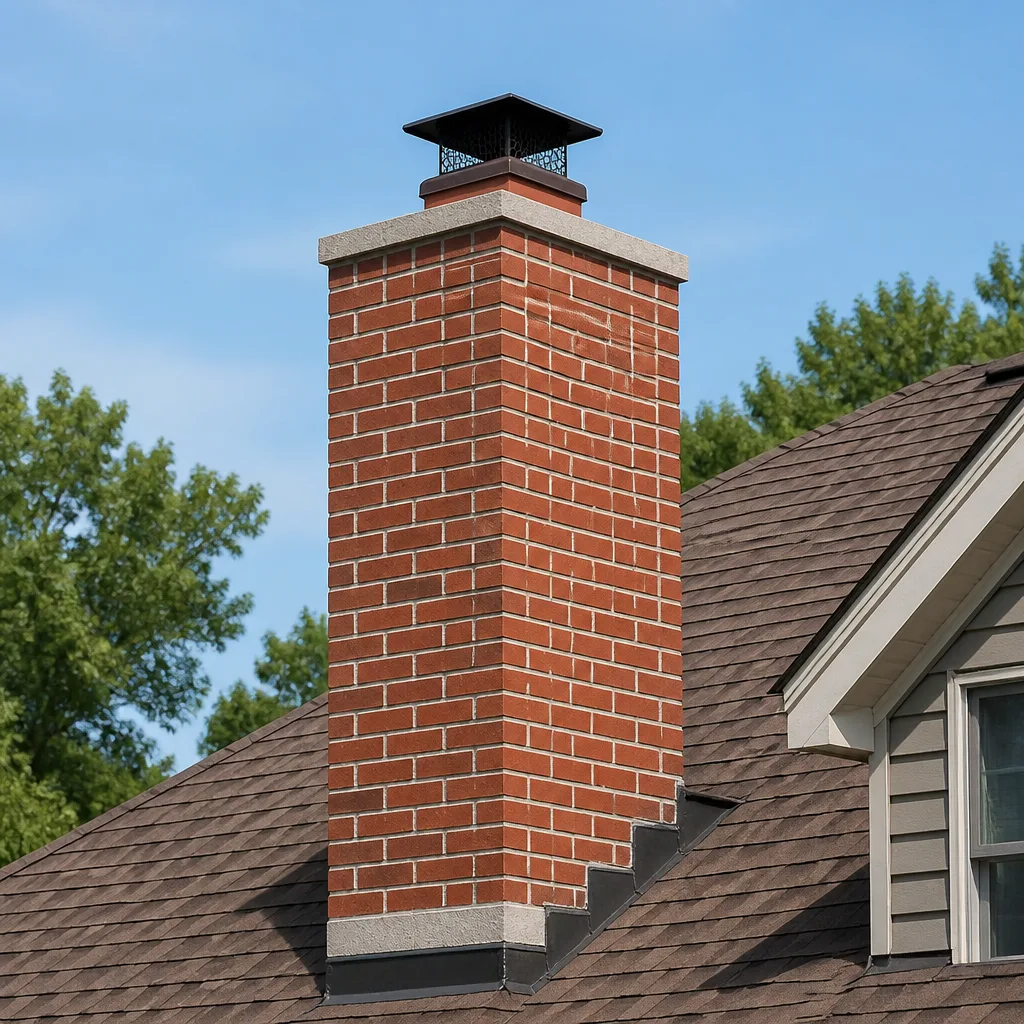
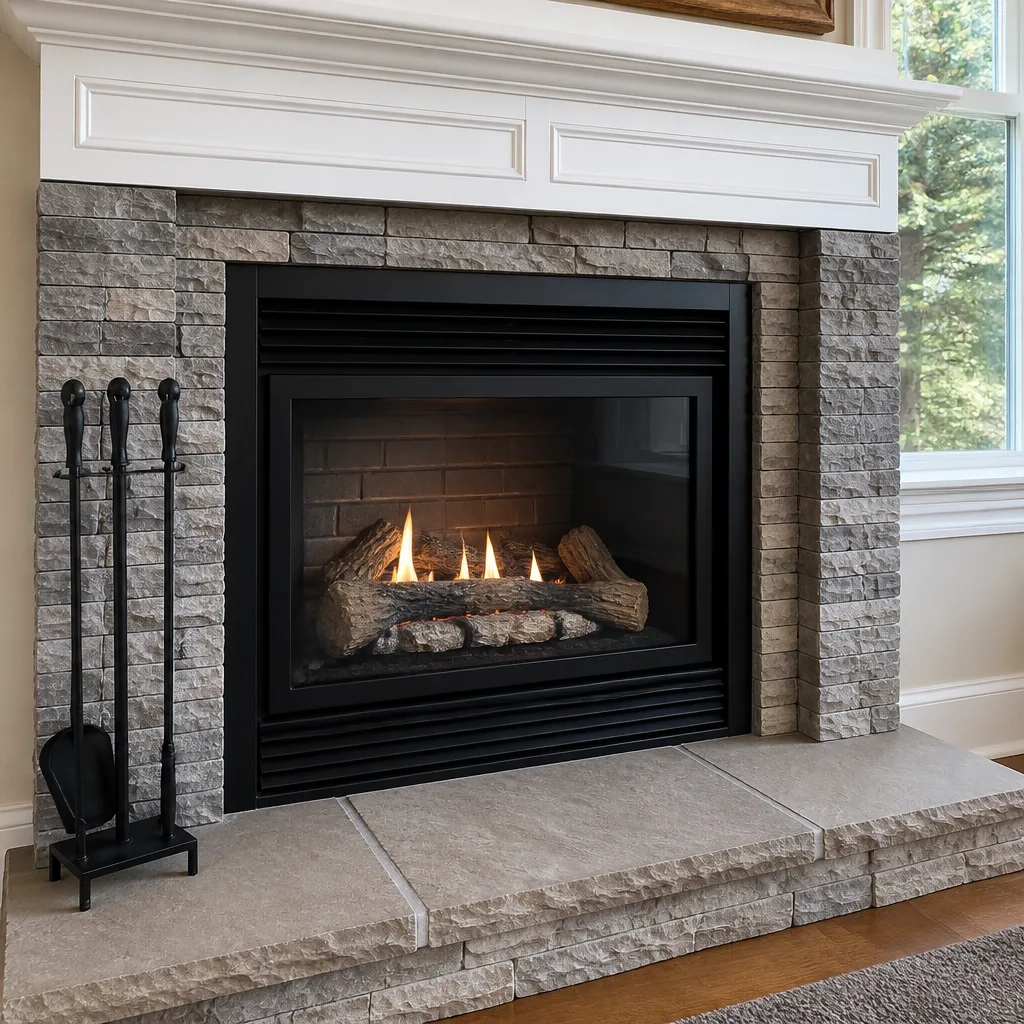
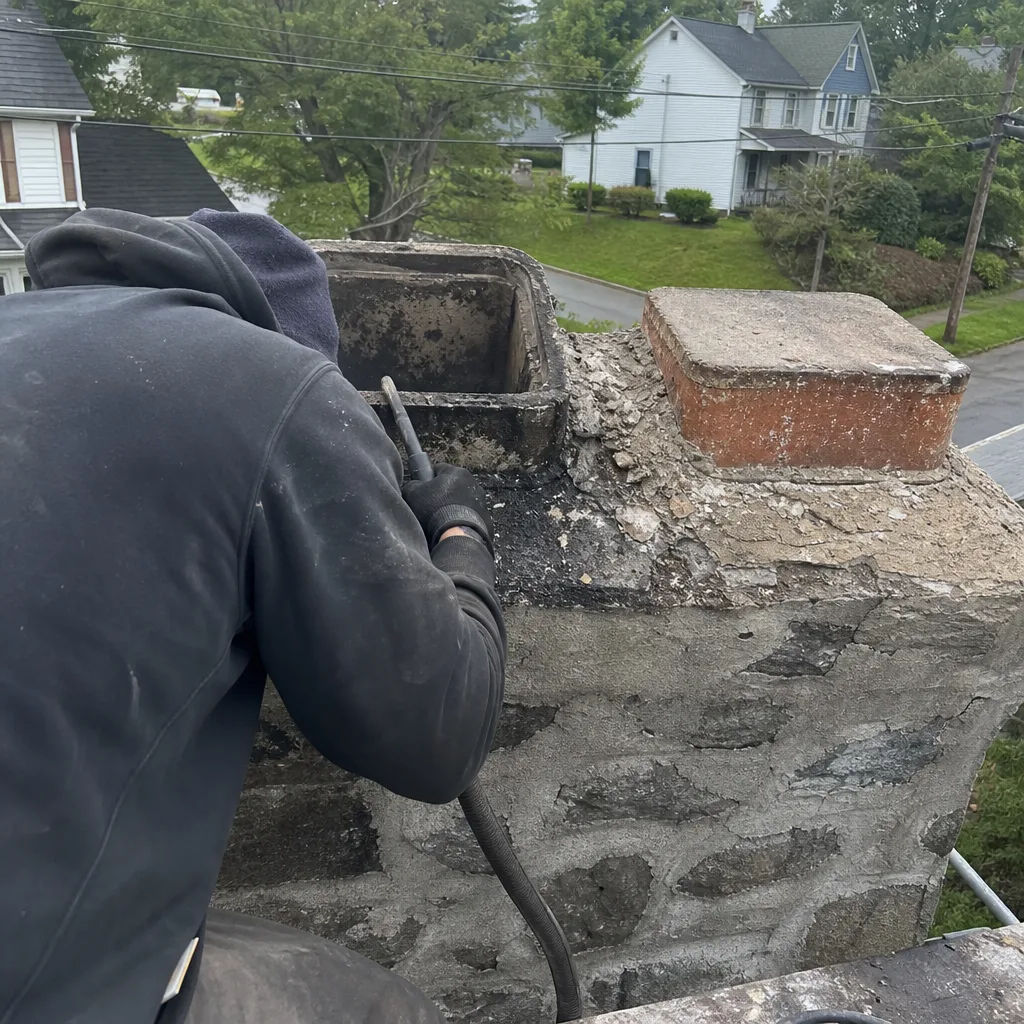 Before
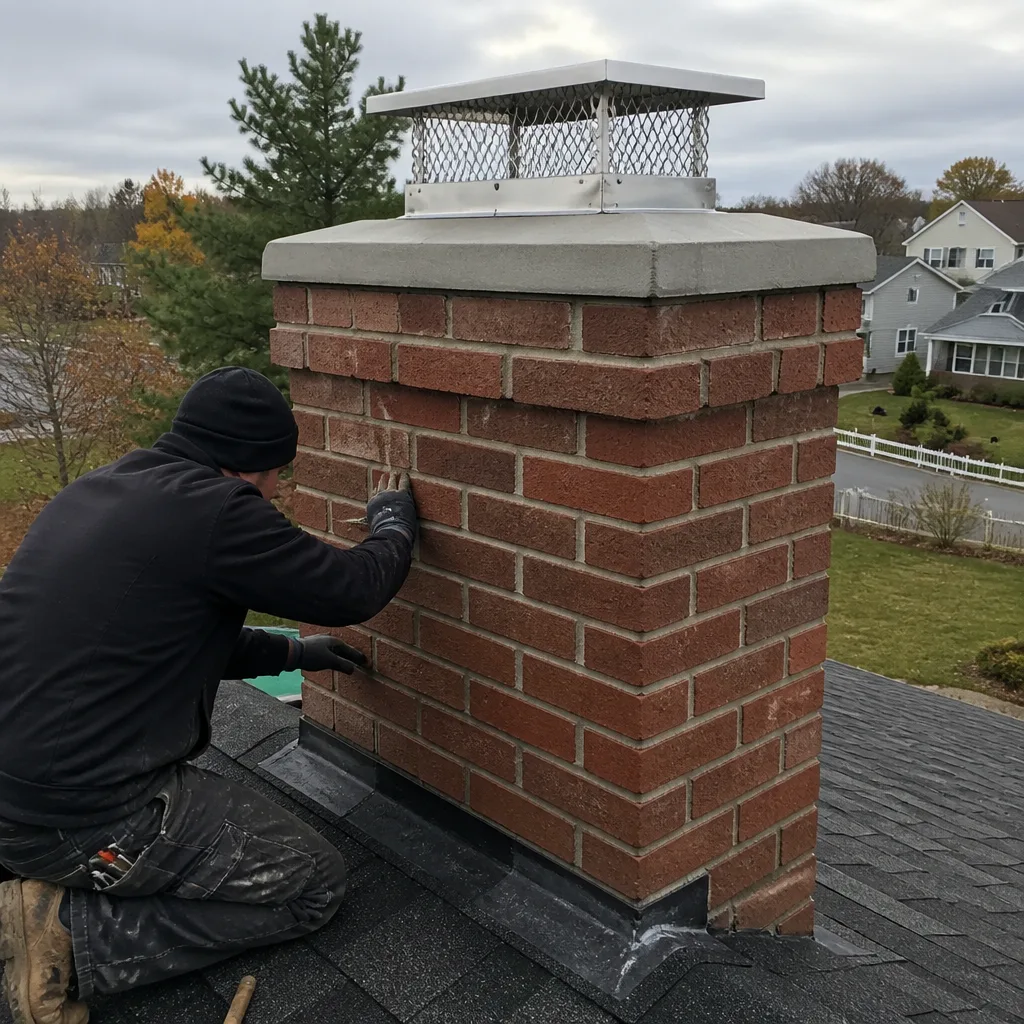 After
After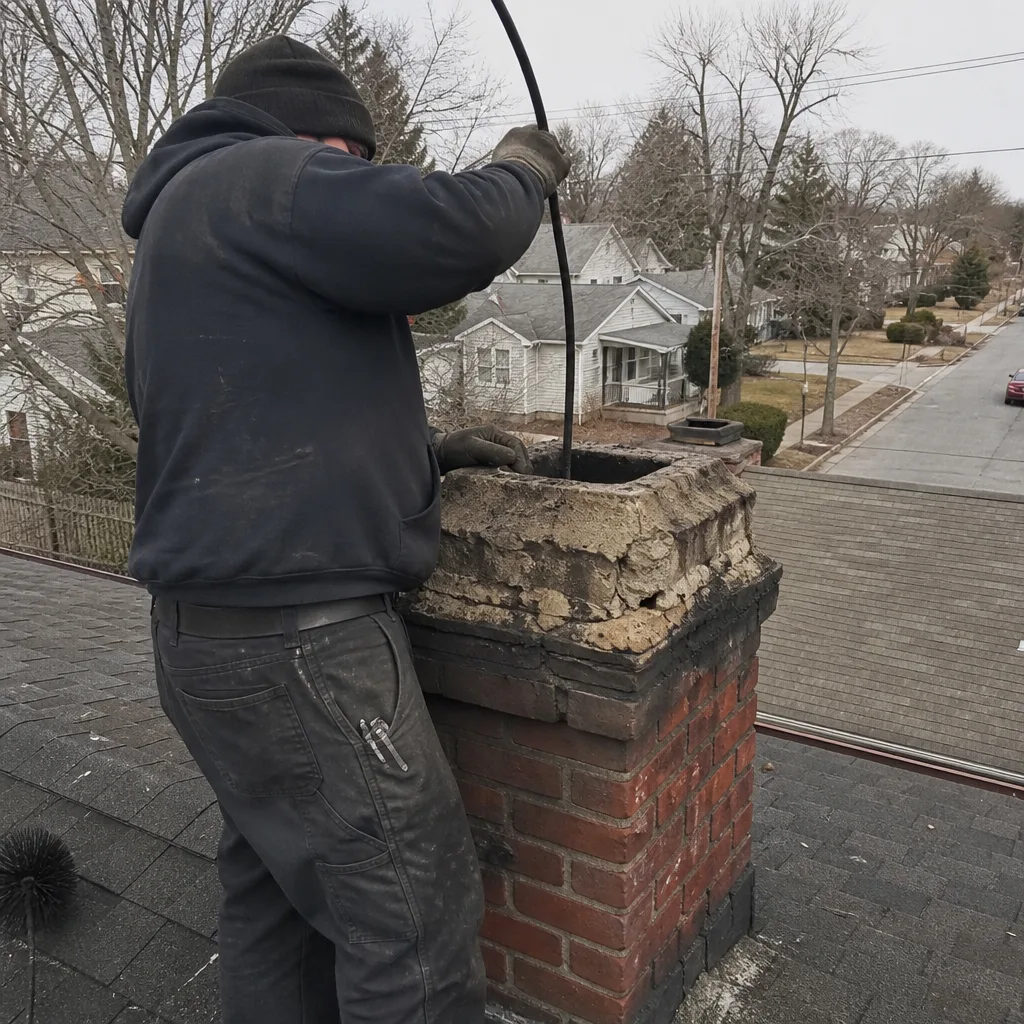 Before
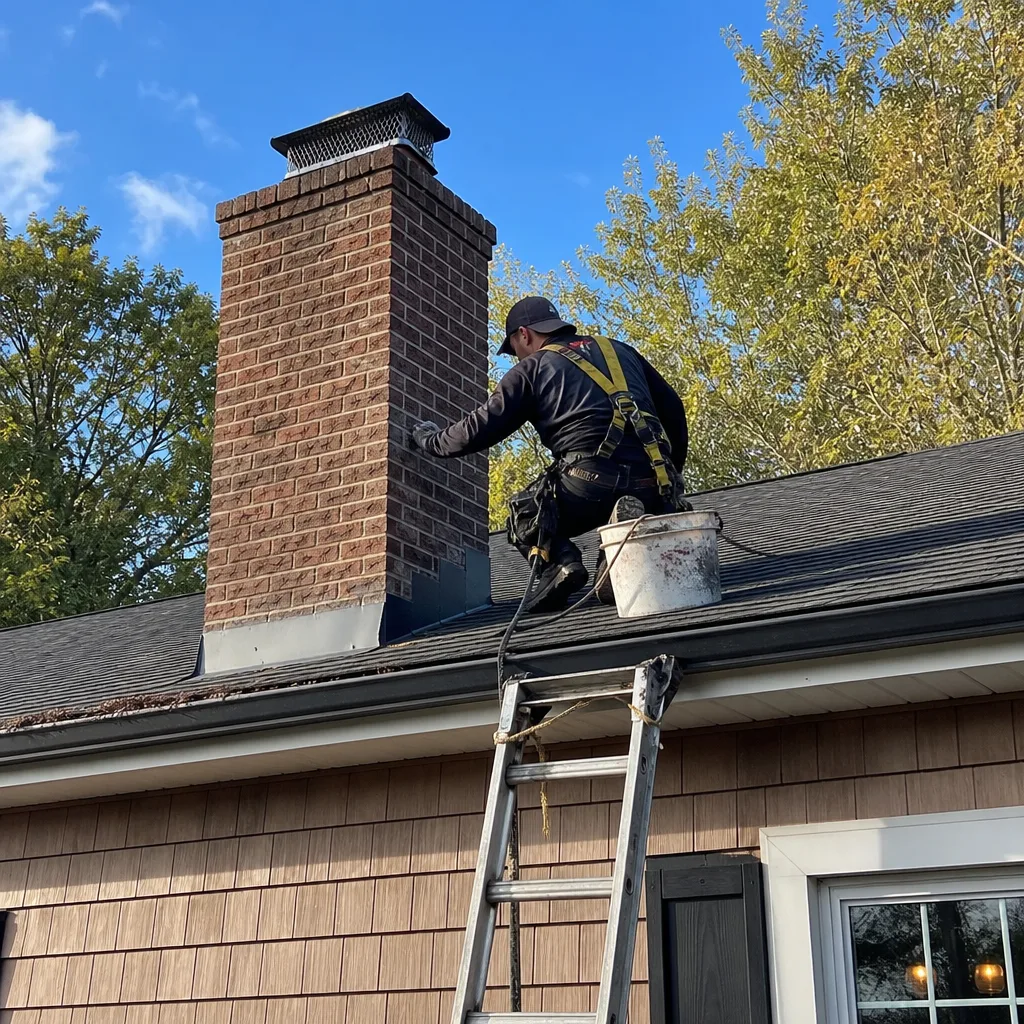 After
After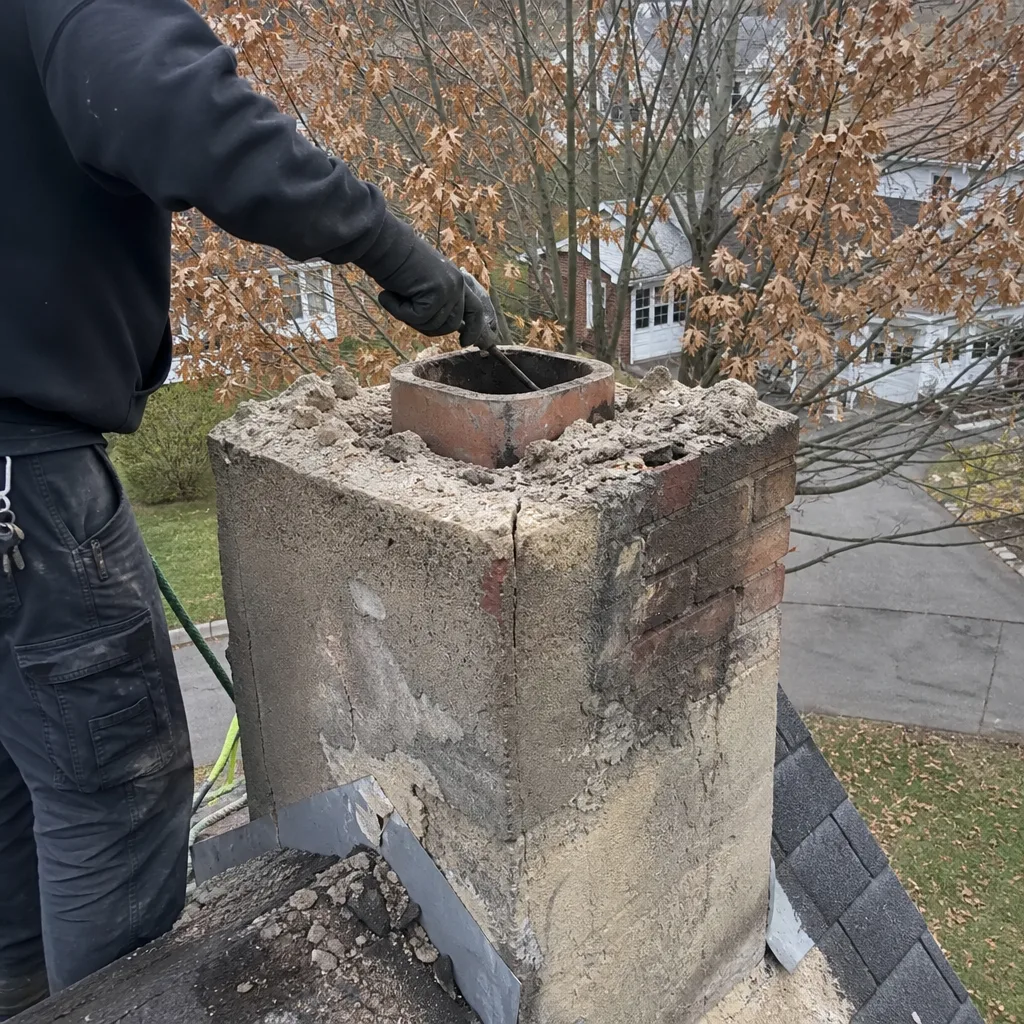 Before
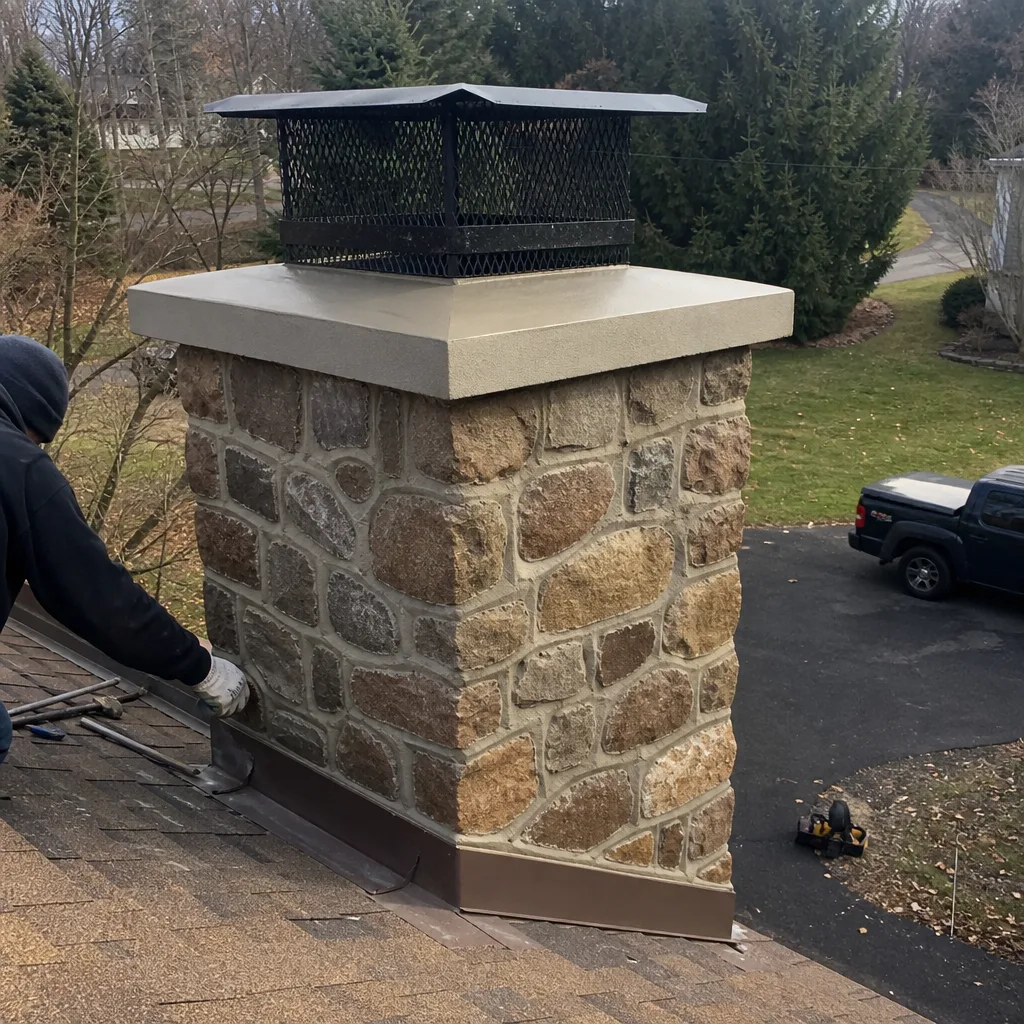 After
AfterFast, Reliable Chimney Liner & Rebuild Across Bath
Chimney liner installation and rebuild work in Bath, PA typically runs between $2,800 and $7,500 depending on flue height, liner material, and how much of the original masonry needs to come down. Most Bath homes we see have stacks that were built for coal, converted for oil, and then switched to gas without the flue ever being properly sized or relined. Wendell Pike and his crew from Top Hat Chimney have been working on those exact stacks for over 29 years. If you need a straight answer about what your Bath chimney actually needs, visit our Chimney Repair - Bath page or call (484) 859-1367.
Why Top Hat Chimney Is Bath’s Preferred Chimney Liner & Rebuild Company
Bath is a small borough, and word travels. Wendell has been running Top Hat Chimney since 1999, and when he quotes a liner job on a twin off Northampton Street or a stone farmhouse out toward the township line, he assumes he’ll run into you at the hardware store next week. That changes how the work gets done. No upselling, no mystery line items, no “while we’re in there” surprises. Every job gets the 90-Day Done Right Promise in writing: if it’s not right, one call brings Wendell back. That’s not a marketing line. It’s stamped on the invoice.
Our Chimney Liner & Rebuild team includes background-checked, uniformed sweeps who show up in a real window and call if that window slips. When you call, a live person answers. Not a call center. At 2 a.m. or 2 p.m., it’s one of us. For people in Bath who have been burned by a national chain that quoted one price on the phone and another at the door, the difference is immediate. We also publish our license number and our address. Wendell puts his name on the work and then sees you again in town.
Our Chimney Liner & Rebuild Services in Bath
Stainless Steel Liner
Most Bath chimneys we reline get a stainless steel system, and for good reason. The borough’s older stacks run hot and cold like nowhere else in Northampton County. Stainless handles the condensation, the freeze-thaw stress, and the acidic exhaust from modern gas appliances without rusting through. We install and service DuraFlex and Olympia Chimney liner systems, and we size the liner to the appliance, not to whatever the old flue happens to measure. A coal-era flue is often 8×12 or larger. A gas boiler needs 4 or 5 inches. Slapping a small liner into that oversized chase is exactly what causes the condensation problems we see all over downtown Bath.

Flexible Liner
Flexible liners make sense in Bath’s 18th- and 19th-century chimneys because those flues are rarely straight. Bends, offsets, corbelled masonry, and later additions all make a rigid liner nearly impossible to install without knocking out more brick than necessary. We use DuraFlex and Gelco flexible systems, and we insulate them when the flue sits on an exterior wall, which is common on the older twins and row houses north of Main Street. Uninsulated flexible liners in Bath’s wind-driven winter conditions cool too fast, producing the same condensation the liner was meant to stop.

Liner Replacement
If you already have a liner and it’s failing, the question is why. In Bath, we usually find one of three things: an undersized liner installed for the wrong fuel, an uninsulated liner condensing against cold masonry, or a liner that was never the right material for the appliance it’s venting. Before we quote a replacement, we run a camera through every flue and show you the footage. You should never agree to a liner replacement on faith. You should see the cracked tile, the rust-through, the separated seam, the sagging center span. Then we talk about what’s next.

Partial Rebuild
Bath’s older stacks often need masonry work above the roofline before a new liner goes in. The crown is cracked, the cap is gone, the top three or four feet of brick are spalling from years of water and freeze-thaw cycles. That’s why we offer our Chimney Cap & Crown in Bath services. That’s a partial rebuild: we take the chimney down to good brick and rebuild it with a proper crown and cap, then drop the new liner into a solid structure. We do this frequently on Bath’s pre-1900 attached twins, where the chimney serves multiple flues and the top section has taken the worst of the weather for a century.

What happens when you call
- 1
A real person answersNo phone trees - you reach a local pro.
- 2
You get an upfront price rangeHonest numbers before anyone is dispatched.
- 3
A background-checked tech heads outLicensed & insured, dispatched right away.
- 4
You approve before work beginsNothing starts until you say go.
Trusted Brands We Service in Bath
We work with DuraFlex, HeatShield, Gelco, Olympia Chimney, Famco, and Copperfield because these companies build products that hold up to Bath’s specific conditions, and because we can get parts fast when a job runs into something unexpected. If you have an existing liner from one of these brands that’s failing, we service it. If you’re replacing one, we’ll recommend whichever system actually fits your flue, your appliance, and your budget. We don’t stock every component for every job on the truck, but Wendell knows what’s common in Bath and keeps those parts ready. That means less waiting and fewer return trips.
Common Chimney Liner & Rebuild Problems We See in Bath Homes
- Oversized coal-era flues on modern gas appliances. The flue is too big for the appliance, so exhaust cools too quickly, condensation soaks the original lime mortar, and the flue starts to spall from the inside out. Hidden until someone looks with a camera.
- Freeze-thaw damage accelerated by wind through Wind Gap. Northwest gusts funnel through the gap just a few miles north of Bath and hit those exposed masonry stacks hard. Cracked crowns, failed cap mortar, and water running down between the liner and the old clay tile rusting through flexible aluminum in under five years.
- Multiple flues sharing one chase with no separation. A coal furnace flue, an original fireplace flue, and a later gas water heater flue all running through the same stack. Without proper separation, they cross-draft. That’s a carbon monoxide hazard and a reason we camera-inspect every flue individually before and after any rebuild.
- Creosote glaze hiding broken clay tile. Homeowners skip the camera check after a basic sweep, a first-degree creosote film hardens into a tar glaze no brush can remove, and behind it lives a cracked clay tile that’s been letting heat into the chase for years.
Pricing for Chimney Liner & Rebuild in Bath, PA
Here are real numbers for Bath’s market. A standard stainless steel liner replacement on a single-story ranch in the township runs $2,800 to $4,200. On a two-and-a-half-story Victorian in the borough core with a tall stack, that same job runs $4,500 to $7,500 because the flue is longer and the access is harder. Partial rebuilds, including the top eight to ten feet of masonry, add $2,000 to $4,500 depending on how much brick needs to come down and how tall the stack is. Full tear-down-and-rebuild varies so widely by chimney height and condition that we won’t quote it without standing on the roof first.
What changes the price in Bath specifically? Flue height, liner diameter, whether the liner needs insulation, how many flues share the chase, and whether we’re working from a ladder or need staging on a three-story rowhouse. We also honor a standing offer: $40 off any repair over $200, a free second opinion on any written estimate, no trip charge inside our service county, and 10% off always for seniors and veterans. Call (484) 859-1367 and you’ll get a straight number before a single tool comes off the truck.
We Also Serve Cities Near Bath
Top Hat Chimney serves the whole corner of Northampton County around Bath, including Chimney Liner & Rebuild in Bath and the surrounding communities. You’ll find us working in Northampton, Coplay, Catasauqua, and Palmerton throughout the year. If you live in one of those towns, the same crew, the same pricing, and the same 90-Day Done Right Promise apply. Call and Wendell or one of his team will answer.
Serving Bath, PA - Our Local Coverage Area
We’re based in the Bath area and know this community well. Use the map below to see our service coverage - if you’re nearby, we can almost certainly help.
FAQs - Chimney Liner & Rebuild in Bath
Because the flue that served an oil burner is almost always the wrong size for a gas boiler or furnace. Gas exhaust runs cooler, so it condenses more. That condensation is acidic, and it eats the old lime mortar between the clay tiles. In Bath’s pre-1900 homes, most of which were built for coal and converted not once but twice, the flue was never properly sized for any of it. We camera-inspect, measure, and install a stainless liner sized to the gas appliance. Call (484) 859-1367 for a free estimate and we’ll tell you exactly what your flue needs.
We can reline one flue and leave the others alone, but only if the others are structurally sound and properly separated from the one we’re working on. In Bath’s downtown blocks, a single stack often holds three or four flues from different eras, and separation is often missing or has crumbled. If the unused flue is in danger of dumping exhaust into the one you use, we’ll tell you and show you on camera. You’re never obligated to fix everything at once, and we’ll be honest about what can wait.
That white powder is efflorescence, and it’s water moving through the masonry and carrying salts to the surface. The crumbling brick is spalling, which is freeze-thaw damage. A liner fixes the inside of the flue, but it does not fix exterior water penetration. You need a crown repair or rebuild, a proper cap, and possibly repointing. In Bath, with the wind-driven rain and snow coming over Blue Mountain, we see crown failures on nearly every older stack. We’ll show you on camera before we recommend any masonry work.
If the flue has a working clay tile liner and no gaps, cracks, or missing mortar joints, it may only need a stainless liner dropped in. But if we find broken tile behind the firebox, missing mortar joints, or a sagging liner on camera, the flue may need a partial or full rebuild first. In Bath’s Victorian-era homes, it’s common for the original fireplace flue to be the one flue in the stack that’s never been touched since it was built. The camera answers the question every time, and we show you the footage before any rebuild quote.
Flexible liners are fine for Bath’s winters if they’re the right size, properly insulated, and installed in a flue that’s in good condition. The problem is uninsulated flexible liners run through exterior masonry chimneys where cold air from Wind Gap keeps the tile freezing. That produces condensation and shortens the liner’s life. We insulate flexible liners on exterior walls, and we recommend rigid liners only where the flue is straight and accessible. It’s about the flue, not the weather alone. Call (484) 859-1367 and we’ll help you sort out what your stack actually needs.
What Actually Happens If You Skip the Liner Work in Bath
Small town, old houses, cold winters, and here’s the part that gets ignored: a failing liner in a Bath chimney doesn’t always fail loudly. Sometimes the flue quietly lets exhaust into the wall cavity for years before anyone notices. Sometimes the first sign is a carbon monoxide alarm at 3 a.m. Sometimes it’s a chimney fire that starts behind the tiles where the brush doesn’t reach. The houses down Main Street and along Chestnut Street and the side streets off Route 512 are dense and attached. A chimney fire in a twin doesn’t just belong to the person who owns the fireplace.
That’s why we run a camera through every flue before we recommend anything. You see the footage. You get a plain-English verdict. If the liner can wait, we’ll tell you it can wait with a straight face and leave you a written note saying so. If it can’t, we’ll show you exactly why on the screen and explain what we’re going to do about it. Nothing gets recommended in Bath on a guess. Ask anyone on your street who’s had us out.
The Bath-Specific Liner Failures Nobody Else Mentions
Here is what Wendell has learned from working Bath stacks for decades. The coal-to-oil-to-gas conversion houses, the 1737 borough charter stock, the Pennsylvania German stone construction, the attached twins with shared party walls, they all create a specific failure mode that does not show up in newer suburban construction. Your flue was built to move coal smoke. Coal smoke runs hot and dry, and it moves a lot of air. Your gas boiler produces cooler, wetter exhaust. When that wet exhaust hits the old lime mortar in a Bath flue, it soaks in, freezes when the house is unoccupied and the stack cools, and spalls the mortar right out of the joints. We find clay tiles stacked loose in the flue cavity, flues partially collapsed behind the firebox, and liners that rusted through in under five years because water ran down from a cracked crown and sat between the liner and the tile. In the downtown blocks especially, a single stack can hold three or four flues from different eras – coal furnace, original fireplace, a gas water heater added in the 1950s, a wood stove pipe from the 1980s – all sharing one chase with no modern separation. Cross-drafting between those flues is real, and it’s invisible until someone runs a camera down each one individually.
We once opened a 19th-century stone chimney on a side street off Main Street in Bath’s borough core. The stack served two attached twins. The original clay tile flue that once vented a coal stove had been sleeved with a too-small gas liner back in the 1990s. The homeowner had been living with a gas smell in the basement for years and no one had ever suggested looking inside the flue itself. With a Level 2 camera, we showed them the third-degree creosote glaze and the sagging center span of the old liner. We rebuilt the top eight feet, dropped a DuraFlex stainless liner sized to the gas boiler, and sealed the unused flue with a championship cap. The condensation stopped. The backdraft stopped. The gas smell disappeared that week. That’s a Bath job, and it’s the kind of work we detail under our Fireplace Services in Bath. That’s what we do here.
No Trip Charge Inside the County, Free Second Opinions, and the Done Right Promise
Top Hat Chimney answers its own phones. When you call (484) 859-1367, a live person picks up. It might be Wendell. It might be someone from the office who can book your appointment and answer basic questions. But nobody routes you to a national call center. Since 1999, this has been an owner-operated local company. Wendell publishes his license number. He shows up in uniform. He gives you a real arrival window and calls if traffic through the Route 512 corridor slows him down.
Every completed job, whether it’s a full liner replacement in a stone Victorian or a partial rebuild on a ranch in the township, carries the 90-Day Done Right Promise in writing. If it’s not done right, one call brings Wendell back at no additional cost. We also offer $40 off any repair over $200, a free second opinion on any written estimate, no trip charge for calls inside our service county, and a permanent 10% discount for seniors and veterans. If you have a written quote from another company, bring it to us. We’ll give you a straight comparison and tell you honestly whether their work scope makes sense for your chimney.
Call Top Hat Chimney for Chimney Liner & Rebuild in Bath, PA
You don’t need to decide today. You need to see your flue. Call (484) 859-1367 and schedule a camera inspection. We’ll show you what’s happening inside the stack, tell you what needs doing, and what doesn’t, and give you a number you can plan around. No pressure, no upselling, no fear-selling. Just the honest word of a local company that’s been doing this since 1999 and will still be here next year. Call (484) 859-1367 for a free estimate.
Written by Wendell Pike, Owner at Top Hat Chimney. Over 29 years working on chimneys across Northampton County and the Lehigh Valley.