

Level 1 sweep and inspection to the NFPA 211 annual standard - flue, crown, cap, and flashing checked and photographed
Chimney sweep logs do not sweep chimneys. They loosen some creosote - which then falls where a brush and vacuum still have to collect it.
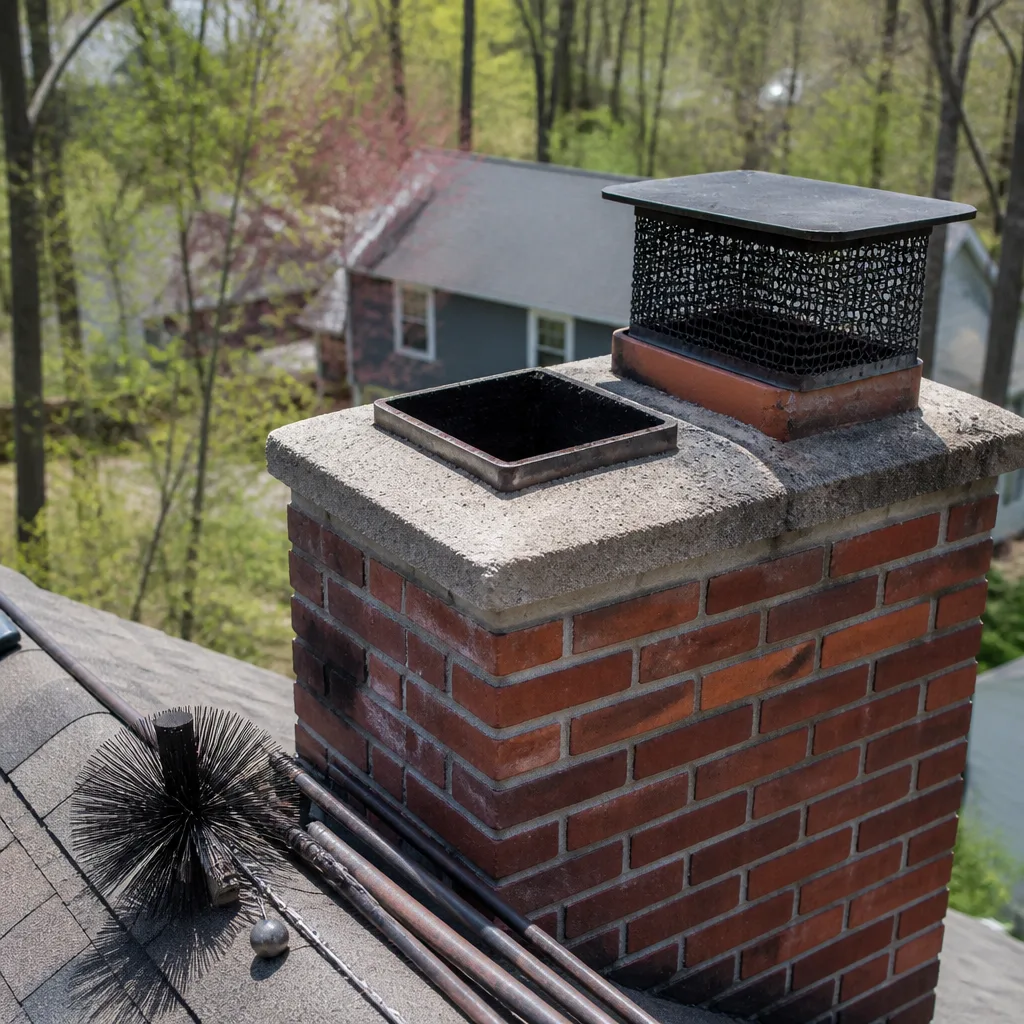
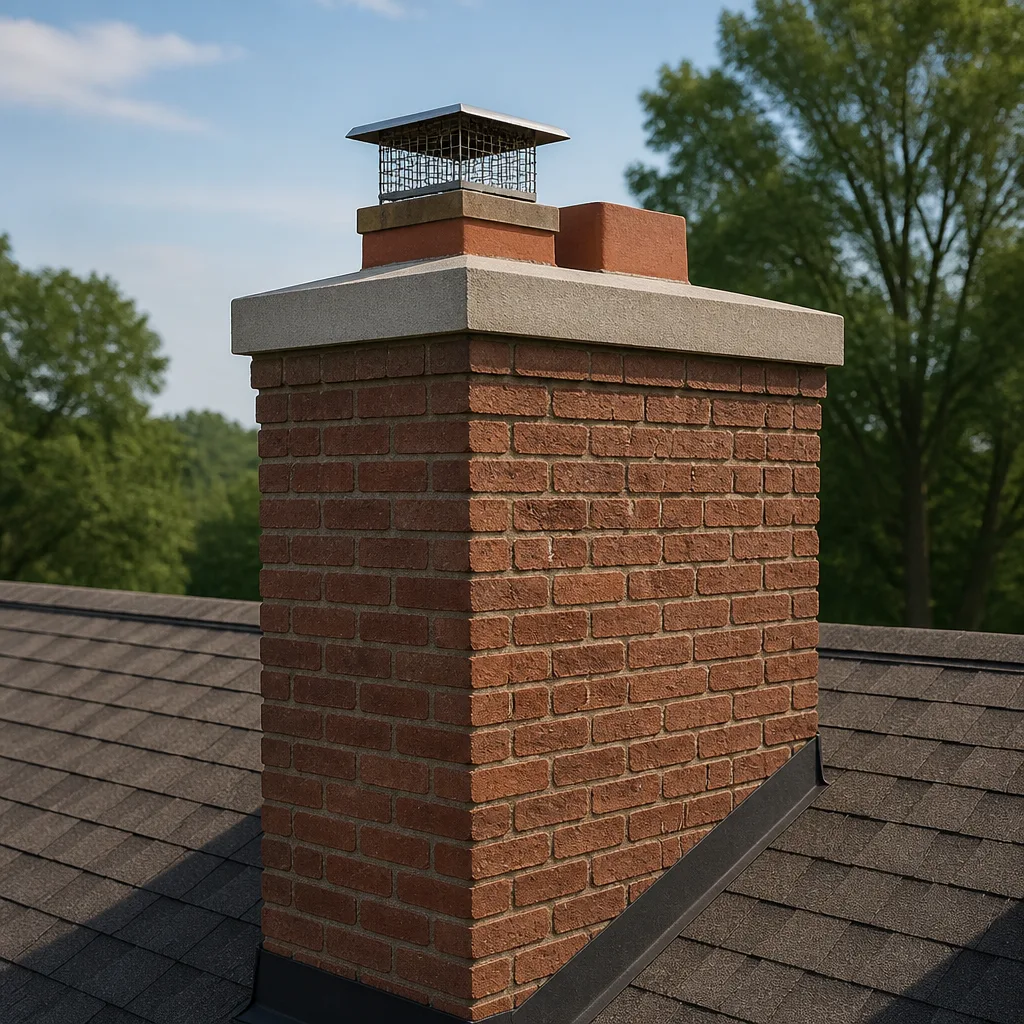
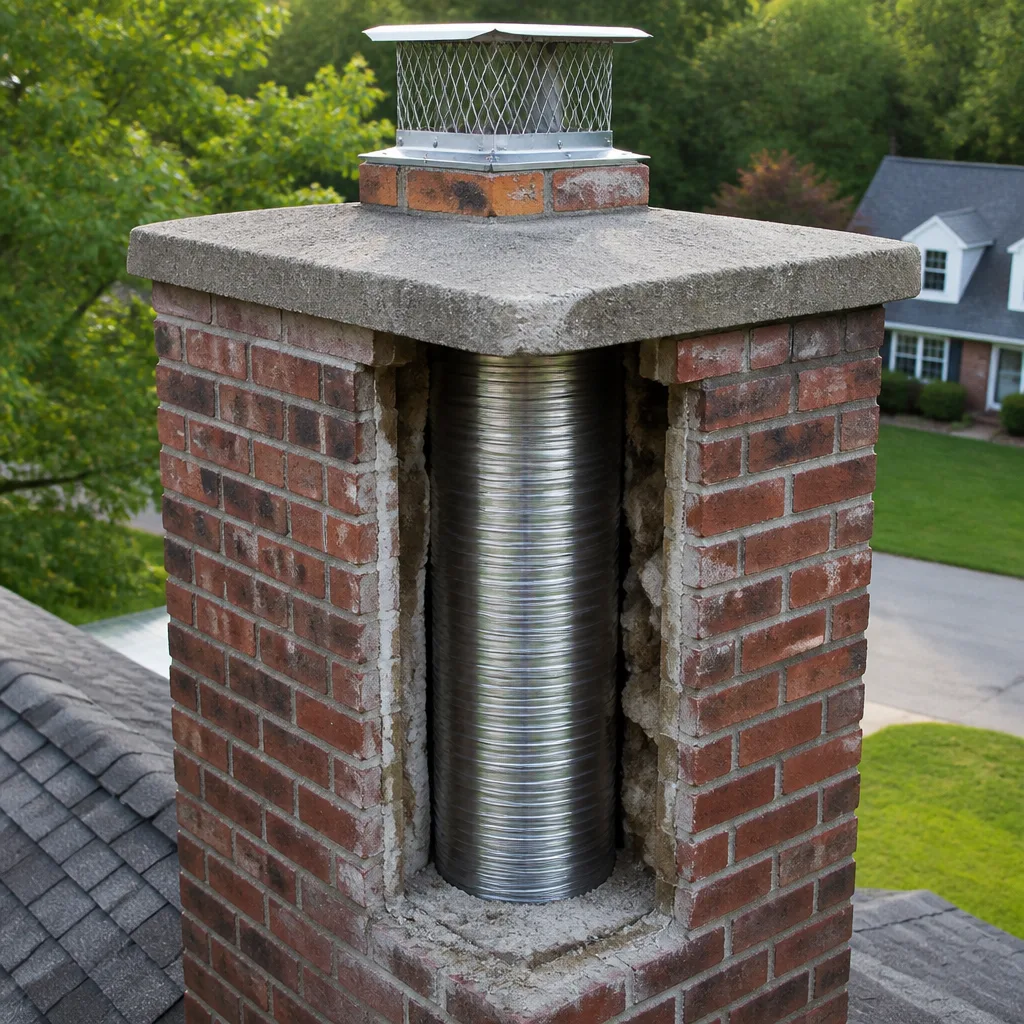
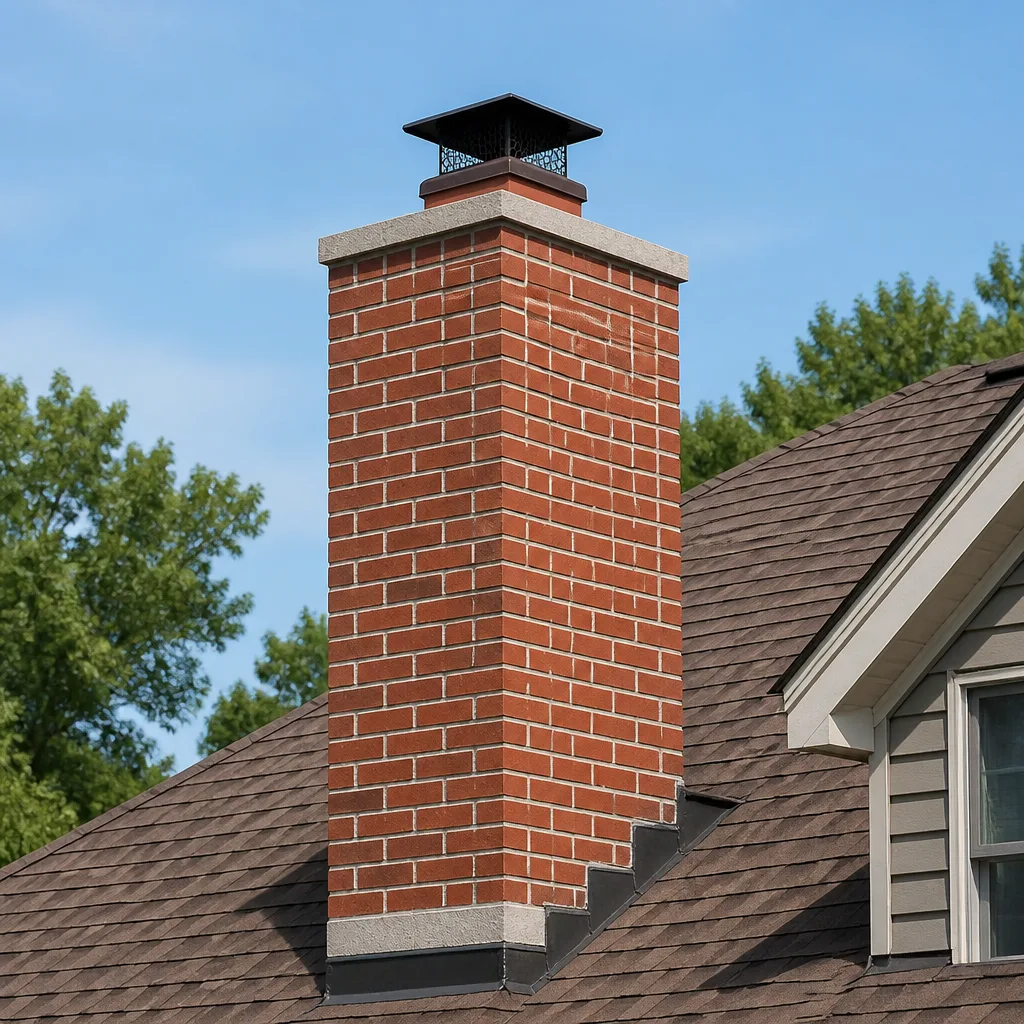
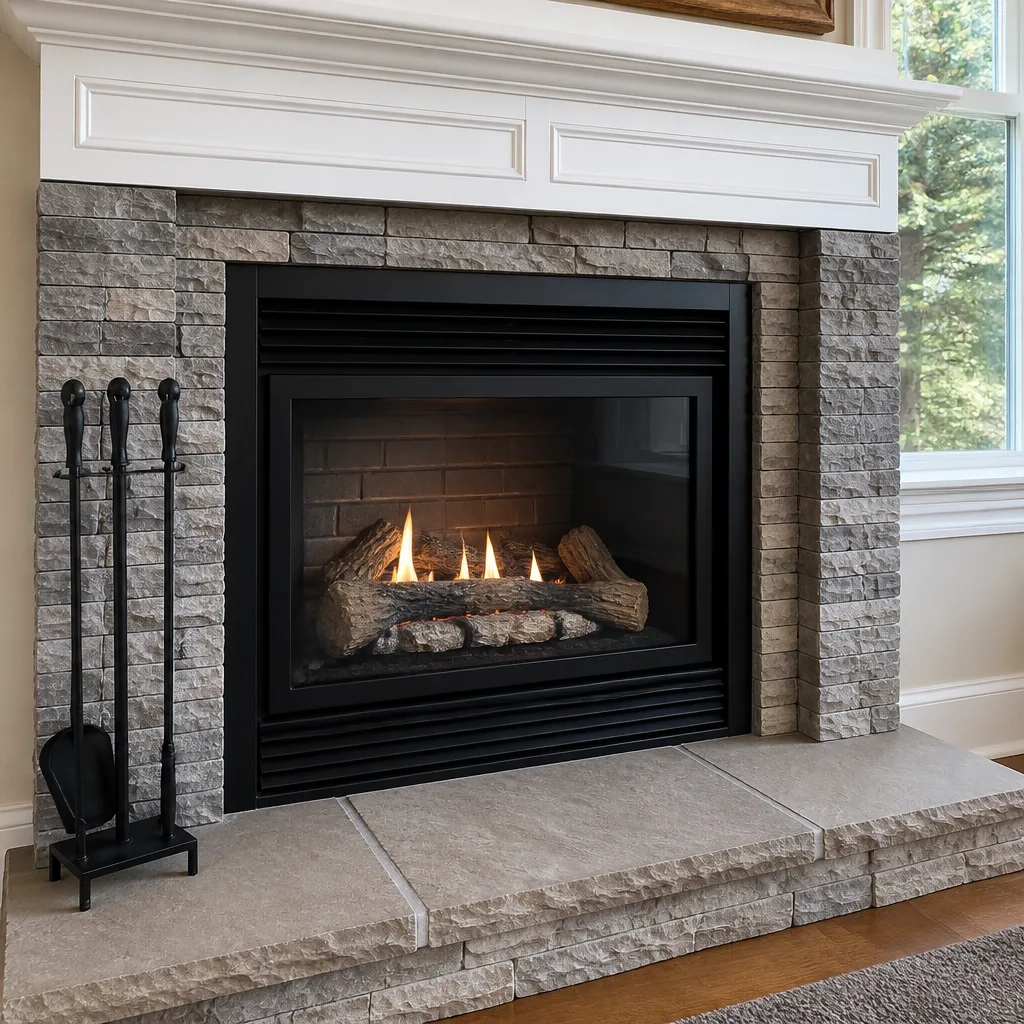
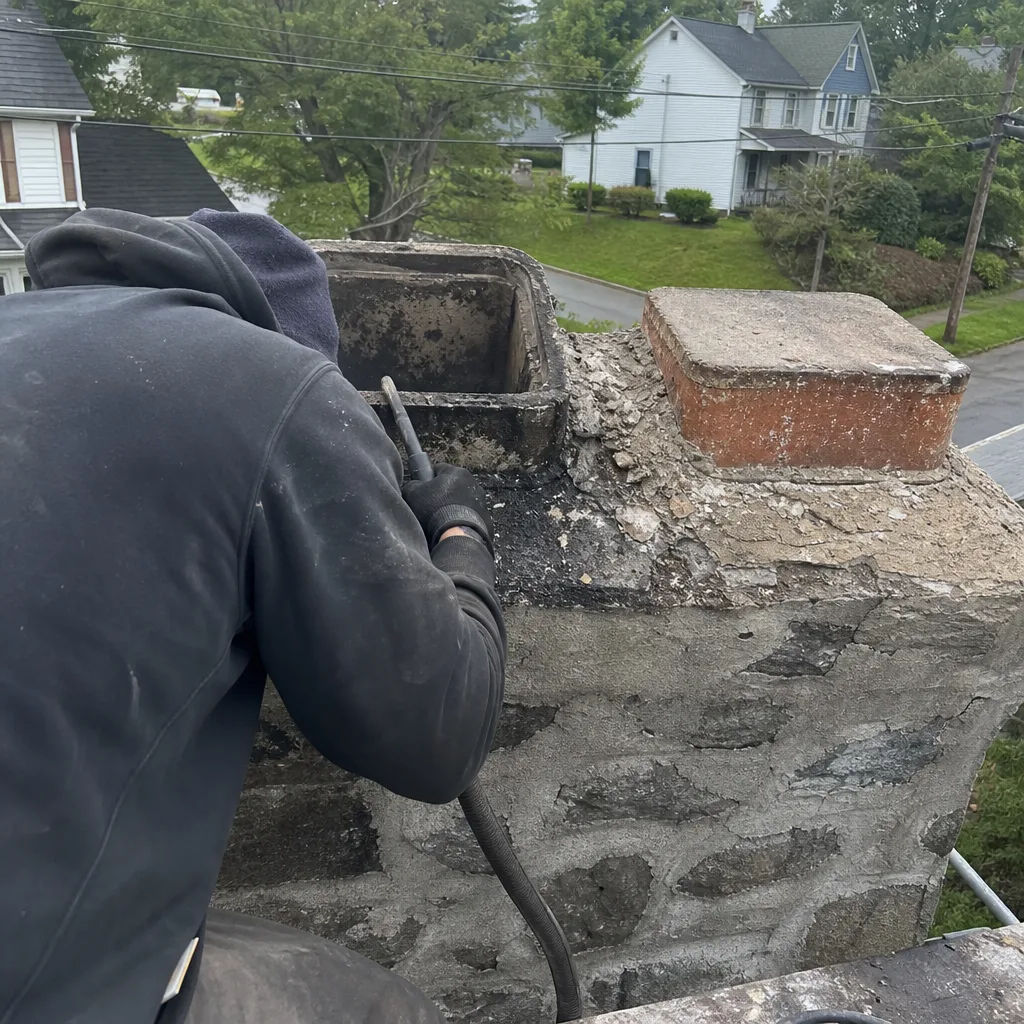 Before
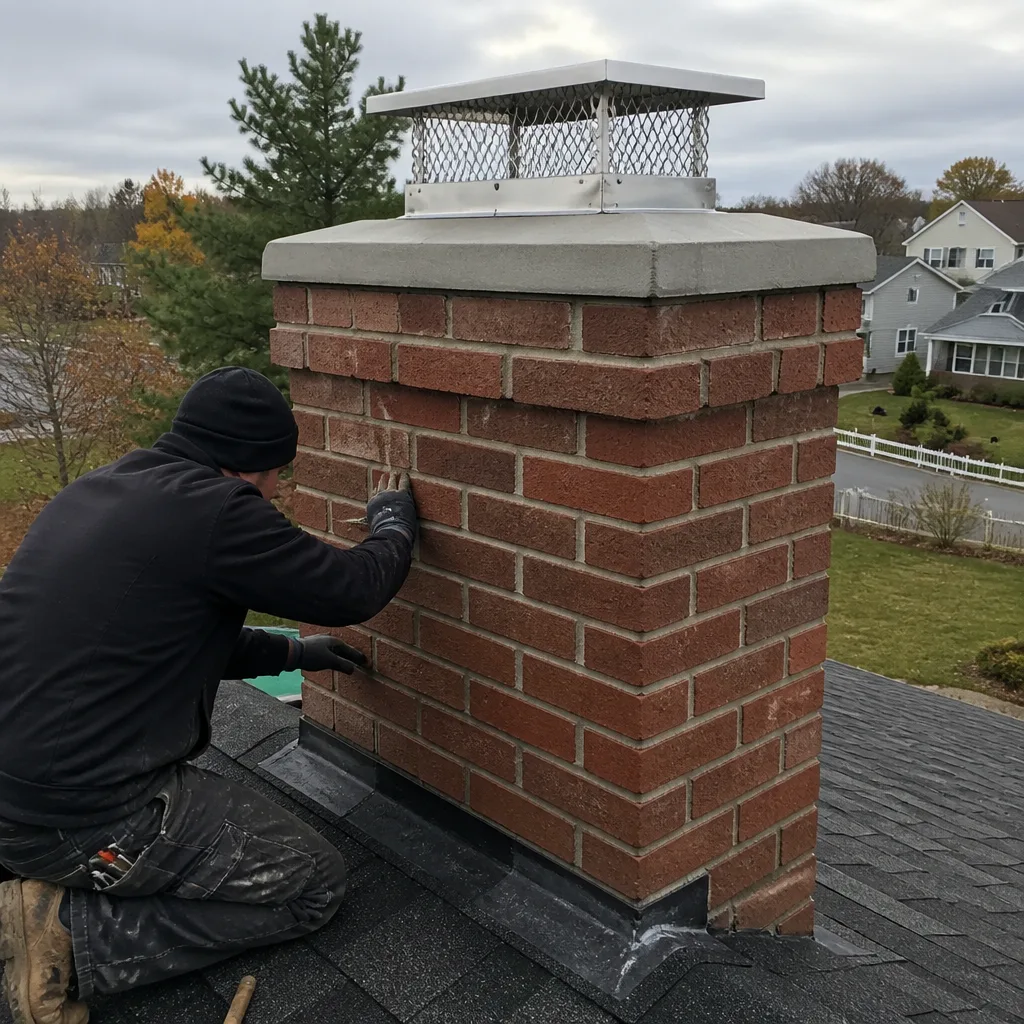 After
After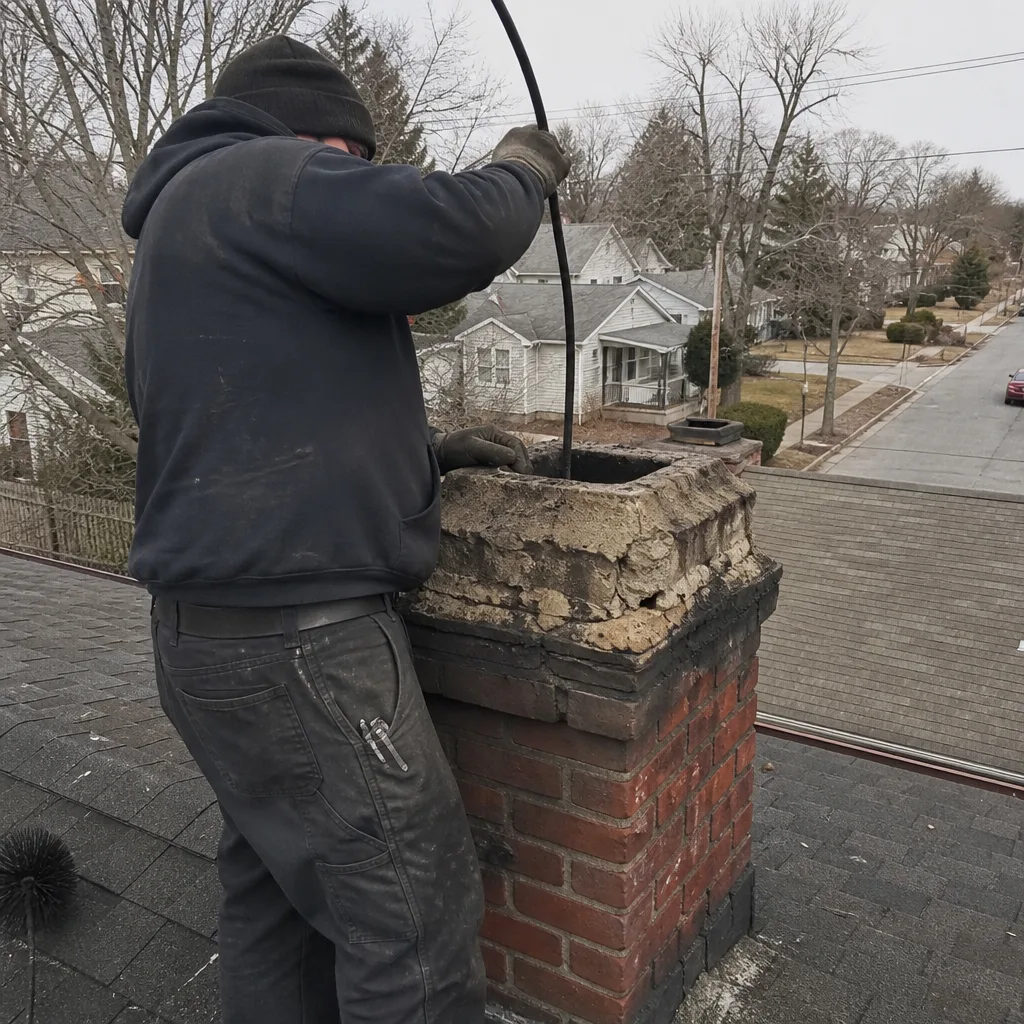 Before
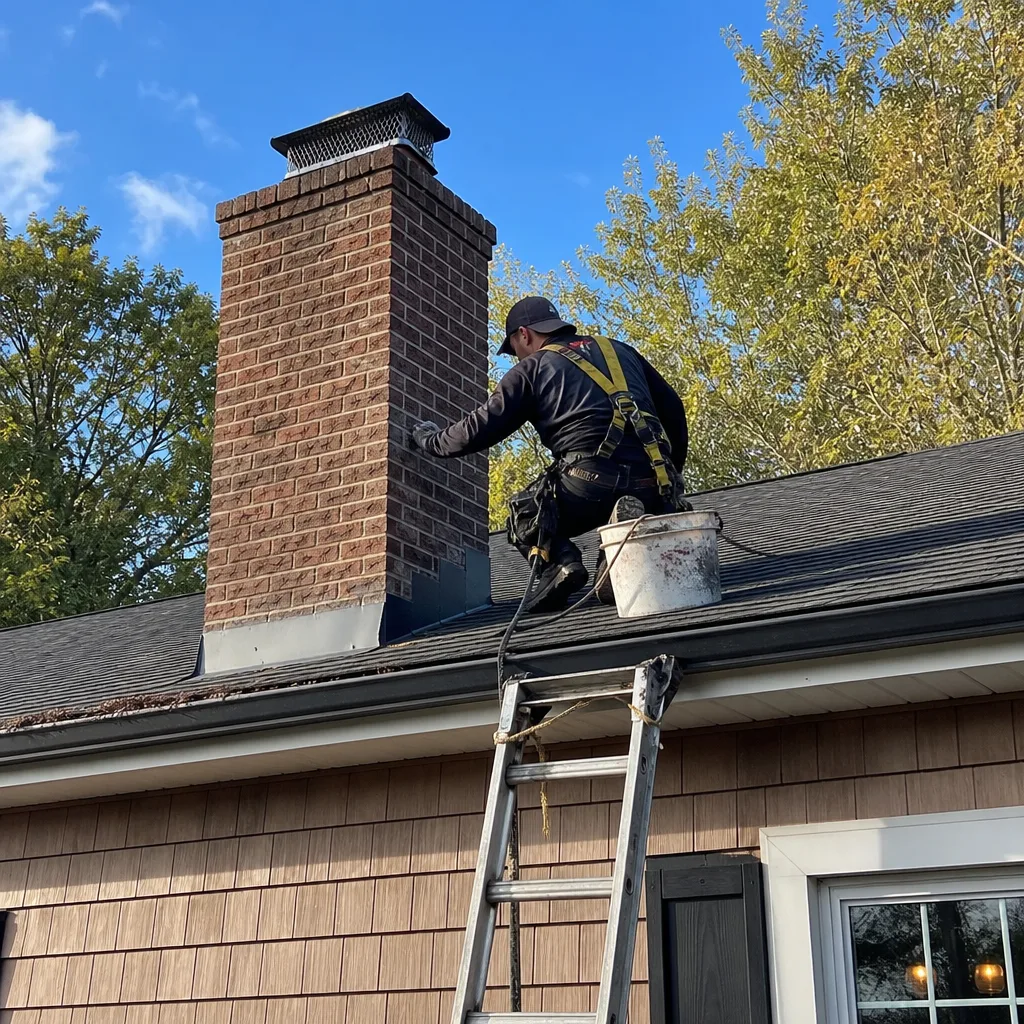 After
After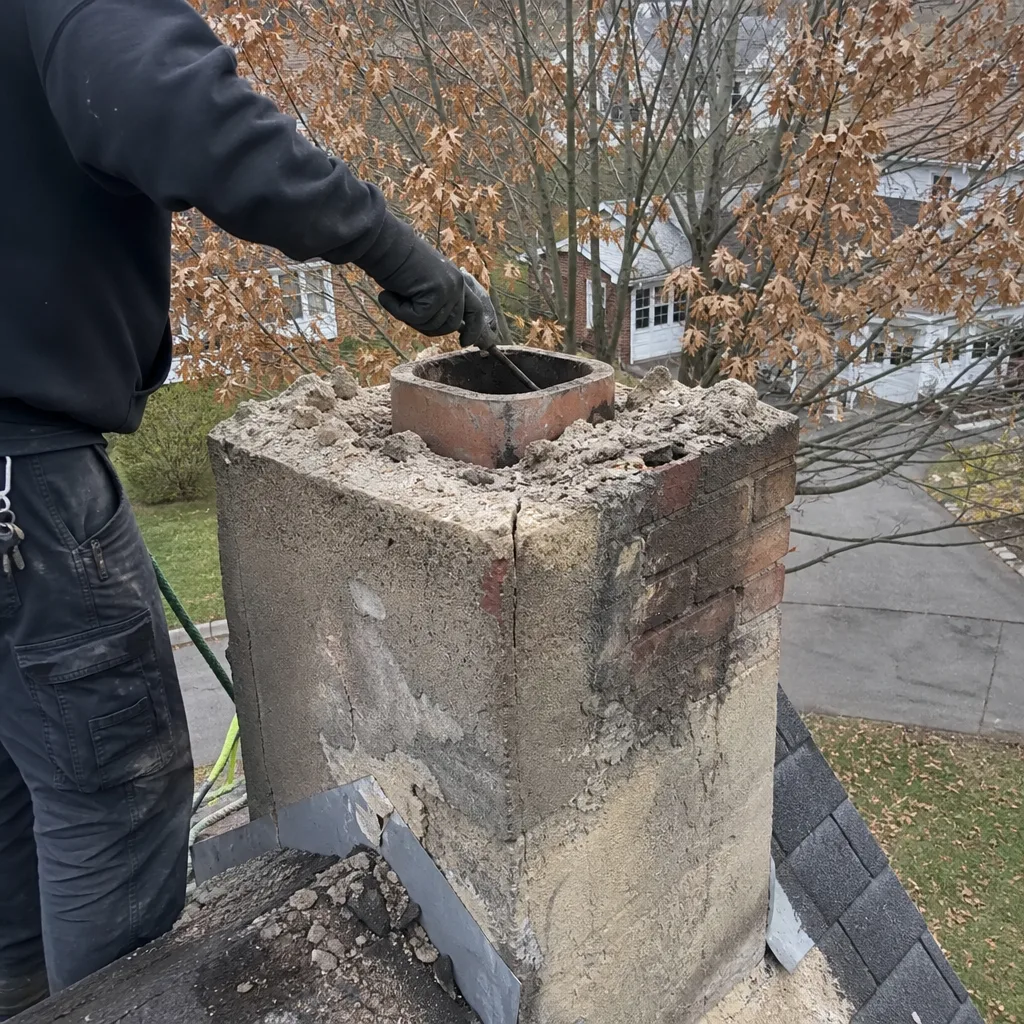 Before
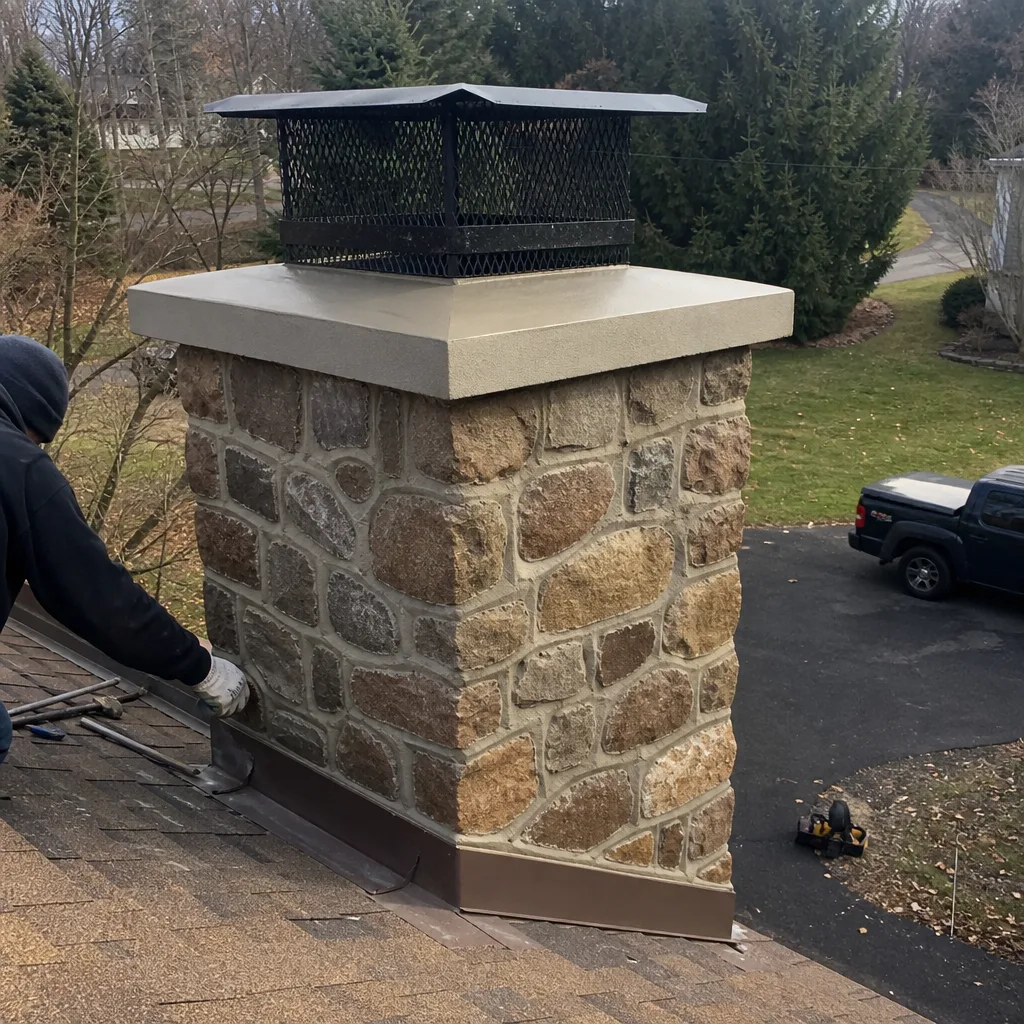 After
AfterCreosote Removal in Northampton, PA
Creosote removal in Northampton typically runs between $150 and $450 depending on how much has built up and which stage it’s reached. Most jobs are completed in a single visit, and we’ll tell you exactly what we’re looking at before a single brush comes off the truck. If you’d rather talk it through first, call us at (484) 859-1367 – a live person picks up, and it may well be Wendell himself.
Creosote is the byproduct of incomplete combustion – wood smoke that cools and condenses on the inside of your flue before it escapes. Every fire you burn leaves a little behind. Burn enough fires over enough seasons without a Chimney Cleaning & Sweep, and that residue moves through three distinct stages: a dry, flaky deposit that a good brush handles in an hour, then a tar-like coating that takes more work, and finally a hardened glaze that has caused house fires in this county and elsewhere across the Lehigh Valley. We’ve been doing this work in Northampton since 1999, and Wendell Pike has seen all three stages in homes on the same street.
Our Chimney Cleaning & Sweep in Northampton service covers routine annual sweeps, but creosote removal – especially Stage 2 and Stage 3 – is its own job. It calls for specific chemical treatments, rotary cleaning systems, and sometimes a camera inspection before and after to confirm the flue is genuinely clear. We use products from trusted names like HeatShield and Gelco where the job calls for them, and we back every completed job with our 90-Day Done Right Promise in writing.
When You Need Creosote Removal
- You see a dark, shiny coating on the damper or flue walls. That glassy look is a classic sign of Stage 3 creosote. It doesn’t brush off – it has to be treated chemically first, then removed. Left alone, it’s the fuel source for a chimney fire that can burn hot enough to crack the liner.
- There’s a strong, oily smoke smell even when the fireplace isn’t in use. In Northampton’s humid summers, Stage 2 creosote absorbs moisture and releases that smell into your living space. If the odor is coming from the fireplace in July, the deposit is already past the flaky stage.
- Your fire inspector flagged creosote during a home sale. We see this regularly in the older colonial and cape-style homes in the Northampton Borough and Allen Township areas. A pre-listing inspection turns up a buildup the sellers didn’t know was there, and the deal stalls until it’s addressed.
- You burn primarily hardwood but haven’t had a sweep in two or more years. Even clean-burning hardwoods leave deposits. Two seasons without a cleaning in a house that burns regularly – especially through a cold Northampton winter – is enough to push a flue from Stage 1 to Stage 2.
- You had a chimney fire, even a small one you weren’t sure about. A flue fire often goes undetected. Signs include a loud popping sound, a strong smell, or visible damage to the cap. After any suspected chimney fire, the flue needs to be inspected and any remaining creosote removed before you burn again – no exceptions.
- Your fireplace smokes back into the room. Heavy creosote narrows the flue opening and disrupts the draft. If smoke is rolling back into the room despite a good fire, buildup on the flue walls is one of the first things to check.
Our Creosote Removal Process
- Phone estimate and honest scope-setting. Before we schedule anything, we ask the right questions – when the flue was last swept, what you burn, how many cords a season. Based on that, we give you a realistic price range on the call. The number we quote on the phone is the number on the invoice. No surprises at the door.
- Camera inspection of the full flue. The sweep who shows up at your door runs a camera down the flue before lifting a brush. This tells us which stage of creosote we’re dealing with, whether the liner is intact, and whether there’s any damage that needs to be addressed alongside the removal. You see the footage. We give you a plain-English verdict – every time, no exceptions.
- Protective setup inside the home. We cover the firebox opening, lay drop cloths on the hearth and surrounding floor, and seal off the fireplace before any tool goes into the flue. Creosote dust is nasty, and a good sweep doesn’t leave your living room smelling like a campfire for a week.
- Stage-appropriate cleaning method. Stage 1 gets a thorough rotary brush pass. Stage 2 deposits are broken down with a certified chemical treatment – applied on the first visit and given time to convert the tar-like coating into something that brushes away cleanly, usually on a return visit. Stage 3 requires a two-step chemical treatment followed by mechanical removal. We use the right method for what we find – not the quickest one.
- Post-removal camera verification. Once the flue walls are clear, we run the camera again. We’re not guessing that the job is done – we’re showing you. If there’s any spot we’re not satisfied with, we address it before we pack up.
- Written summary and 90-Day Done Right Promise. Every job leaves with a written summary of what we found, what we did, and what – if anything – we recommend watching. And every job is covered by our 90-Day Done Right Promise: if something isn’t right, one call brings Wendell and the crew back at no additional cost. That’s not a marketing line – it’s in writing on your invoice.
Creosote Removal Pricing in Northampton
Creosote removal in Northampton, PA costs between $150 and $450 for the majority of residential jobs. Stage 3 treatment – the hardened glaze – can run higher depending on how extensive the buildup is and whether the liner needs follow-up attention. Here’s how the pricing breaks down in practice:
| Creosote Stage | Description | Typical Price Range |
|---|---|---|
| Stage 1 | Dry, flaky deposit – standard brush removal | $150 – $220 |
| Stage 2 | Tar-like coating – chemical treatment plus mechanical removal | $220 – $340 |
| Stage 3 | Hardened glaze – multi-visit chemical and mechanical process | $340 – $450+ |
| Camera inspection (pre and post) | Included with all creosote removal jobs | No separate charge |
A few things affect where your job lands in those ranges. How long since the last sweep, what you burn (softwoods like pine produce more creosote than seasoned hardwoods), how tall the flue is, and whether the liner shows any damage that needs documenting or repair. We don’t pad the quote for a tough job, and we don’t cut corners on a simple one.
If your repair bill comes to over $200, our standing $40 off offer applies automatically – you don’t have to ask. Seniors and veterans always get 10% off. And if you’ve got a competing written estimate, we’ll give you a free second opinion, no obligation.
Call (484) 859-1367 and we’ll give you an honest price range before we ever set foot in your driveway. Estimates are free, and there’s no trip charge for calls inside our service county.
What Makes Third-Degree Creosote Dangerous
Stage 3 creosote is worth its own section because homeowners often underestimate it. It doesn’t look like soot. It’s a hard, shiny, tar-black glaze that fuses to the flue walls, and it is extremely flammable – it ignites at a lower temperature than the flue tiles themselves. When it burns, it burns at temperatures that can exceed 2,000 degrees Fahrenheit, hot enough to crack clay tile liners, damage masonry, and spread fire into the framing of your home.
We’ve responded to calls in the Northampton area – including homes in Siegfried and Cherryville – where a Stage 3 chimney fire had already cracked the liner before the homeowner knew anything had happened. In one case, the family had been burning a fireplace insert all winter without Fireplace Cleaning. The insert ran efficiently and looked fine. The flue was a different story.
Stage 3 removal is not a DIY project, and it’s not something a shop vac and a wire brush will fix. The chemical treatments that convert the glaze into something removable have to be applied correctly, and the physical removal process requires the right tools and eye protection because fragments can be sharp and come down fast. If a sweep quotes you a Stage 3 job over the phone without running a camera first, find someone else.
A safety note: If you suspect a chimney fire has already occurred – unusual cracking sounds during a burn, a strong acrid smell, debris in the firebox that wasn’t there before – stop using the fireplace immediately and call a professional before the next fire. The structural integrity of the flue liner has to be confirmed before it’s safe to burn again.
Creosote Removal and Chimney Liner Damage
Stage 3 creosote and liner damage often go together, and it’s important to be upfront about that. When we run the camera after a heavy creosote removal and find cracked tiles or gaps in the liner, we’ll tell you – and we’ll show you the footage. A damaged liner is a separate repair, and it’s not automatically included in a creosote removal quote. But catching it at the same visit saves you a second appointment and means nothing falls through the cracks.
Where liner repair or relining is needed, we work with HeatShield resurfacing and DuraFlex stainless liner systems depending on the condition of the existing flue. Both are proven products that have been in service long enough that we’re comfortable putting our name behind them. We’ll tell you which one suits your situation and why – and we won’t recommend a full reline if a resurfacing will genuinely handle the problem.
How Often Should You Have Creosote Removed in Northampton?
Once a year, as a floor – not a ceiling. The Chimney Safety Institute of America recommends annual Level 1 Inspections and cleaning for any chimney in active use, and Northampton’s winters make that practical advice, not just a standard line. Most households burning wood from October through March are generating enough deposits to warrant an annual sweep.
If you burn more than two cords a season, or if you’re burning in a high-efficiency insert where combustion temperatures in the flue are lower (which accelerates creosote formation), we’d suggest a mid-season check in addition to the annual sweep. A quick Level 2 Inspection in January can tell you whether the deposit rate is outpacing the schedule.
And if you haven’t burned in a few years – maybe the kids grew up and moved out, or you switched to a gas insert for a while – don’t assume the chimney is fine. Chimneys deteriorate in the off-season too. Birds nest in uncapped flues. Masonry cracks from freeze-thaw cycles. Any chimney that’s been idle should be inspected before you light the first fire of the season.
FAQs – Creosote Removal in Northampton
How much does creosote removal cost in Northampton, PA?
Creosote removal in Northampton typically costs between $150 and $450, depending on the stage of buildup and the condition of the liner. Stage 1 is usually $150-$220; Stage 2 runs $220-$340; Stage 3 starts around $340 and can go higher if the buildup is extensive. Camera inspection is included with every job – you see exactly what we found before and after. Call (484) 859-1367 for a free estimate with no trip charge inside the county.
Is Stage 3 creosote really that serious, or is this just an upsell?
Stage 3 creosote is genuinely the most dangerous condition a residential chimney develops. It ignites at lower temperatures than the liner, burns extremely hot, and can crack flue tiles or damage masonry in a single event. We’ve seen the aftermath in homes in this area. We’ll show you the camera footage – if it’s Stage 1 and a brush job handles it, that’s what we’ll tell you. Wendell has never had any interest in selling work that doesn’t need doing. If the camera shows Stage 1, you’ll get a Stage 1 price and a Stage 1 job.
Can I use a creosote remover log instead of calling a sweep?
Creosote treatment logs can help reduce Stage 1 deposits between professional cleanings – they’re not a replacement for a sweep. They don’t remove existing buildup; they chemically alter it so it’s easier to brush away. For Stage 2 or Stage 3, a treatment log won’t make a meaningful dent, and it won’t tell you whether there’s liner damage underneath the deposit. An annual professional cleaning is still the right approach, and it’s what your homeowner’s insurance and the manufacturer of most fireplaces and inserts requires to keep warranties valid.
How long does a creosote removal job take?
A Stage 1 removal on a standard single-story flue typically takes 60-90 minutes from setup to cleanup. Stage 2 often requires two visits – the first to apply the chemical treatment, the second (usually a week or two later) to complete the mechanical removal. Stage 3 can take multiple visits depending on the extent of the glaze. We’ll give you a realistic timeline on the first call, and if the job runs longer than expected, we’ll tell you why – not just hand you a revised invoice.
Key Takeaways
- Creosote moves through three stages – each one harder to remove and more dangerous than the last. Catch it at Stage 1 and it’s a brush job. Catch it at Stage 3 and it’s a multi-visit process with chemical treatment.
- Every Top Hat Chimney creosote removal includes a camera inspection before and after – you see the footage and get a plain-English summary of what we found.
- Pricing in Northampton runs $150-$450 for most residential jobs. No trip charge inside the county. $40 off any repair over $200. 10% always for seniors and veterans.
- Every job is covered by the 90-Day Done Right Promise – in writing. One call brings us back if anything isn’t right.
- Wendell Pike has been working chimneys in this area since 1999. He puts his name on the work and backs it with a real guarantee, not a call center and a voicemail box.
Ready to Schedule Creosote Removal in Northampton?
If it’s been more than a year since your last sweep – or if you’re not sure when the last one was – call us at (484) 859-1367. A live person answers around the clock, and we’ll give you an honest price range before we ever schedule the visit. No pressure, no trip charge inside the county, no number that changes at the door. Our full home page covers everything we do and every community we serve if you want a broader look at Top Hat Chimney before you call.
First-degree creosote is a brush job. Third-degree is a glaze – and the difference between them is usually just a season or two of letting it go. Call us before it gets there.
Written by Wendell Pike, Owner at Top Hat Chimney, serving Northampton.