
Last updated September 10, 2026
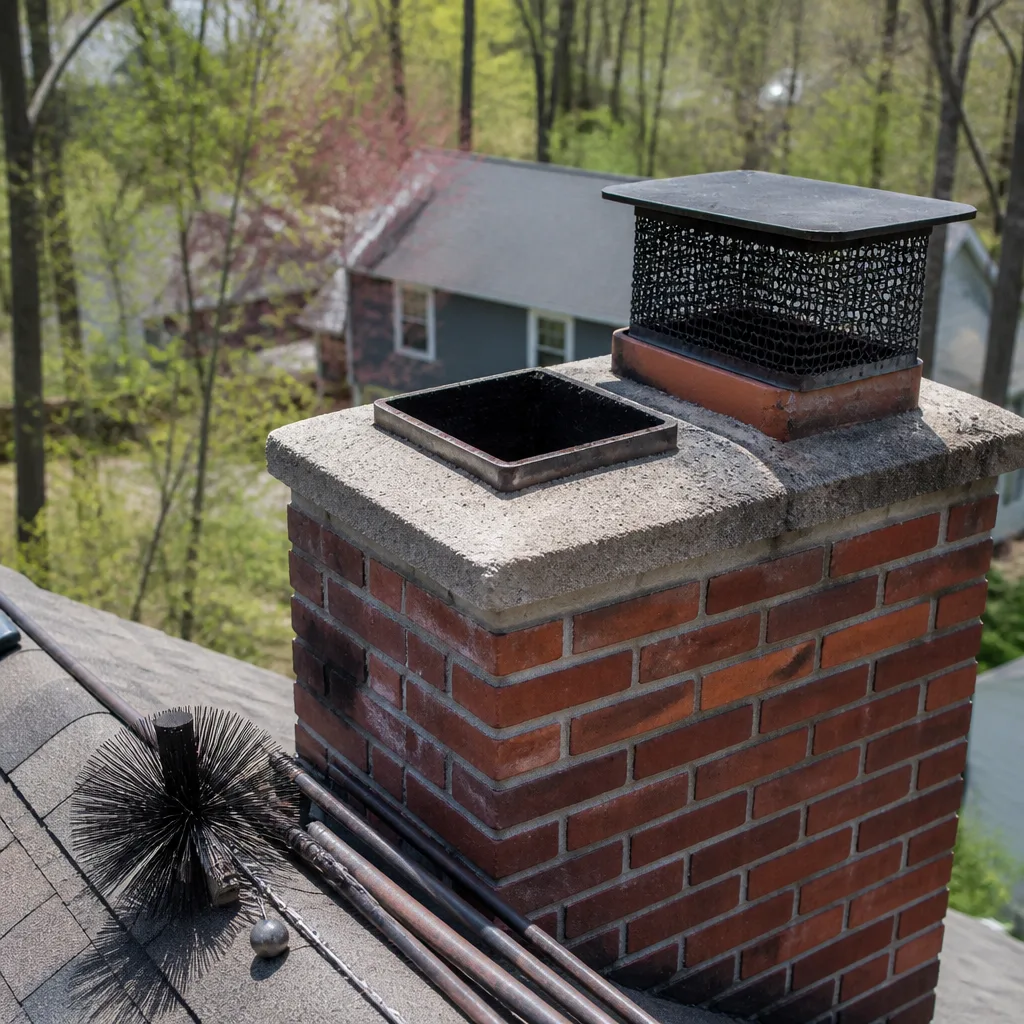
Level 1 sweep and inspection to the NFPA 211 annual standard - flue, crown, cap, and flashing checked and photographed
Chimney sweep logs do not sweep chimneys. They loosen some creosote - which then falls where a brush and vacuum still have to collect it.
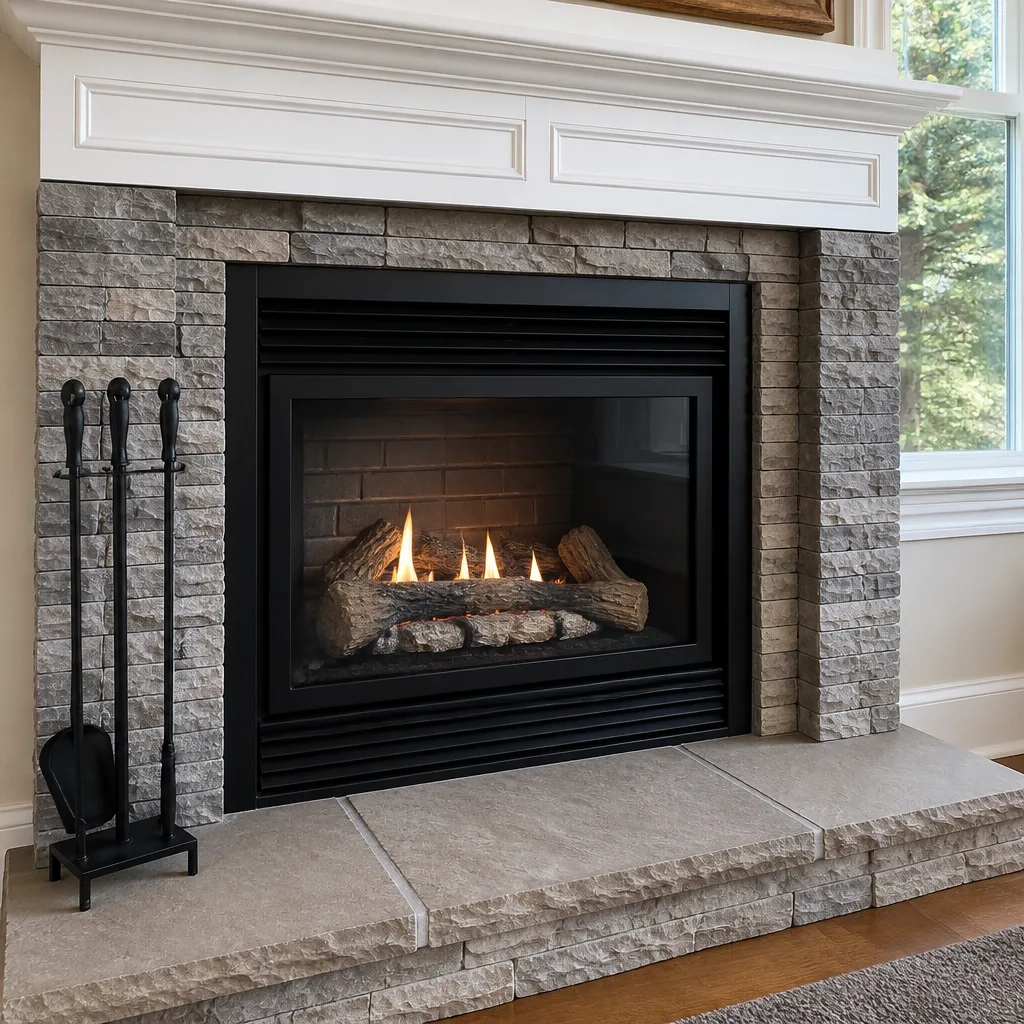
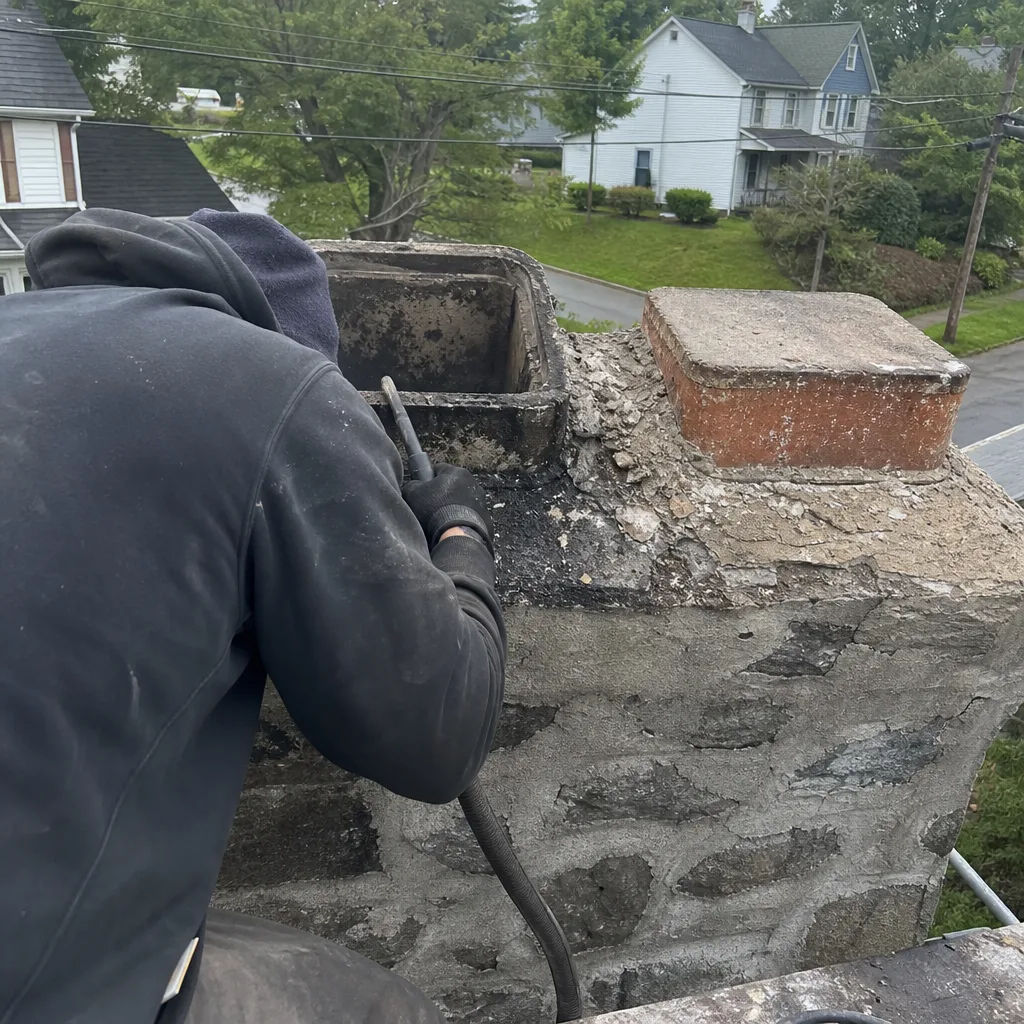 Before
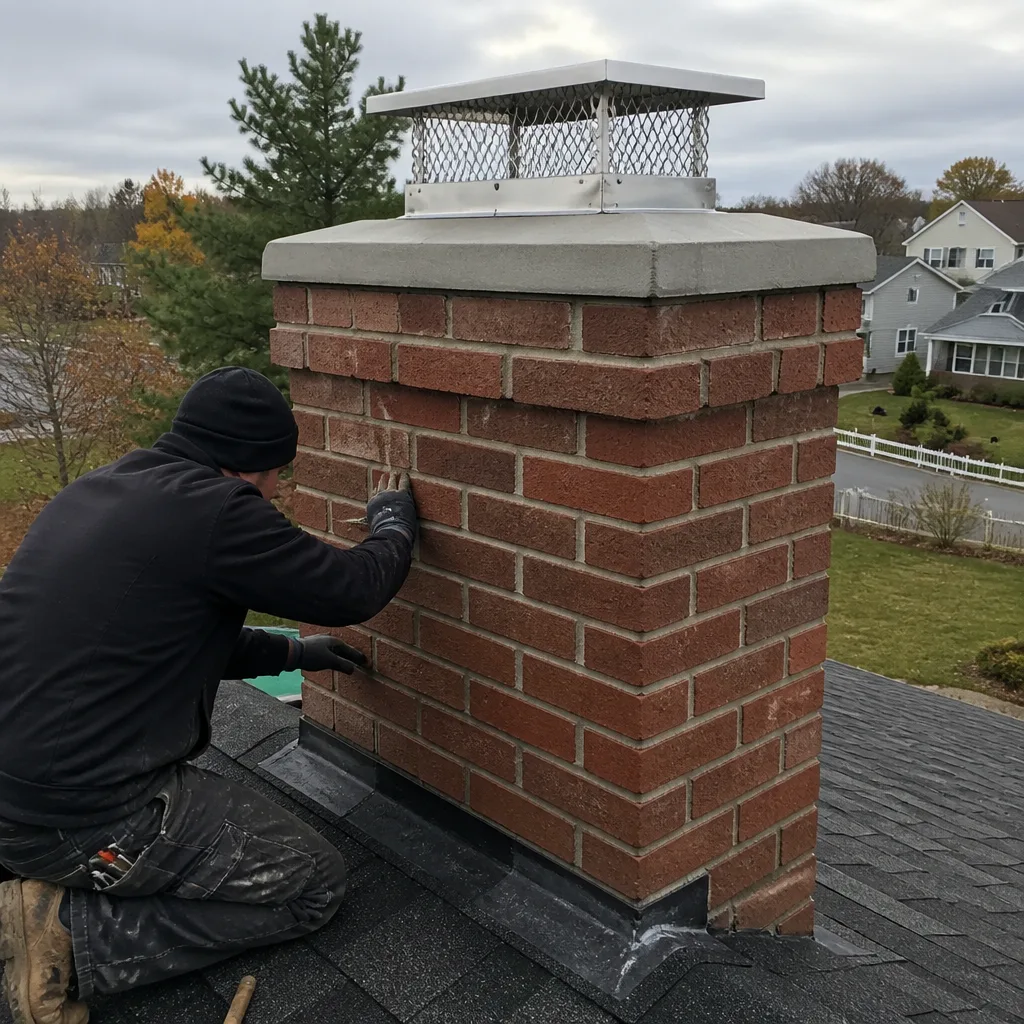 After
After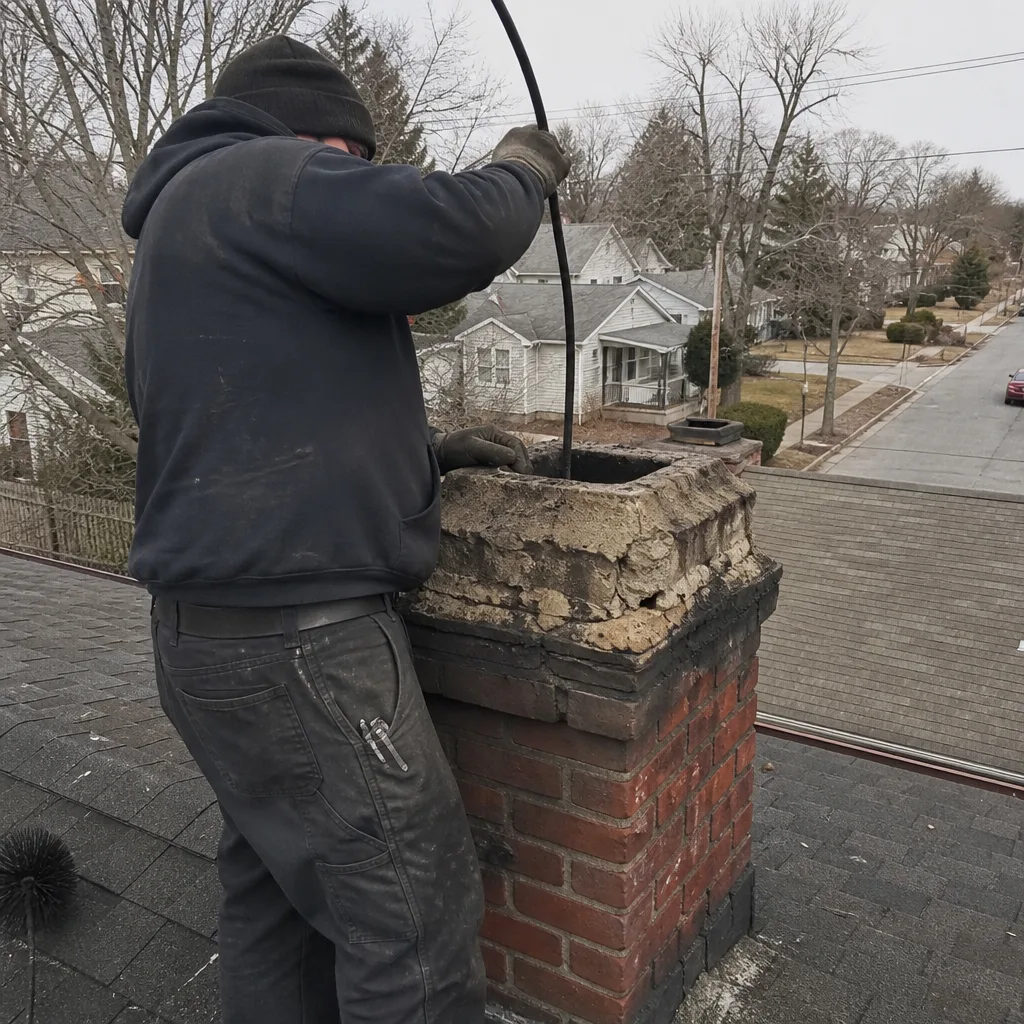 Before
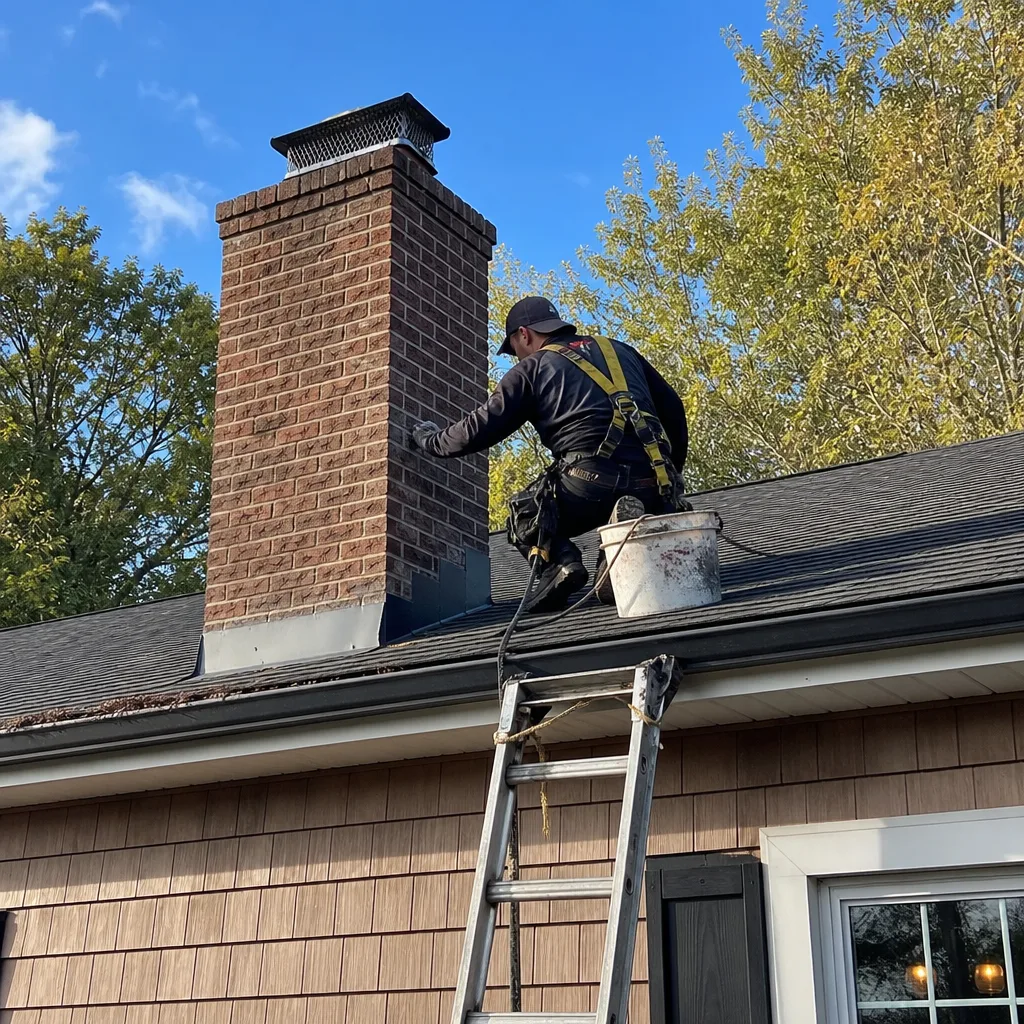 After
After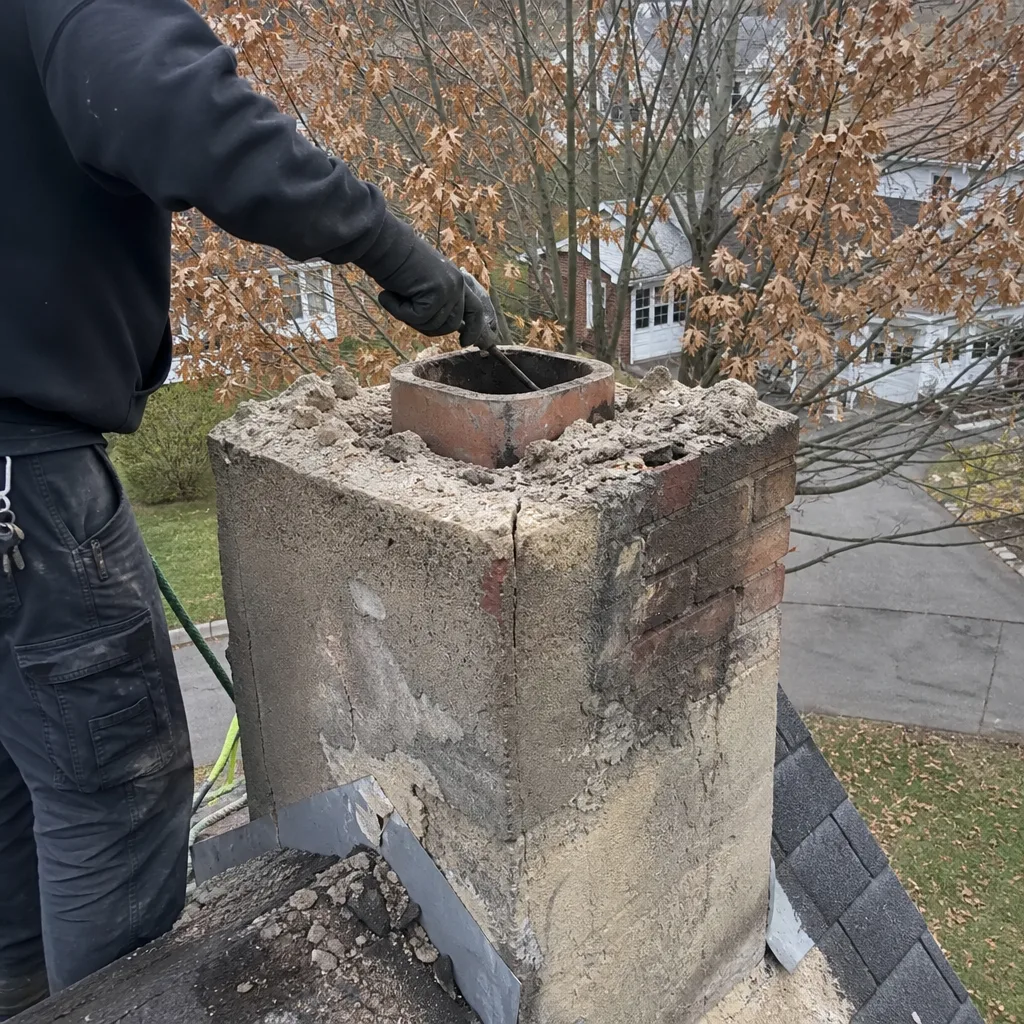 Before
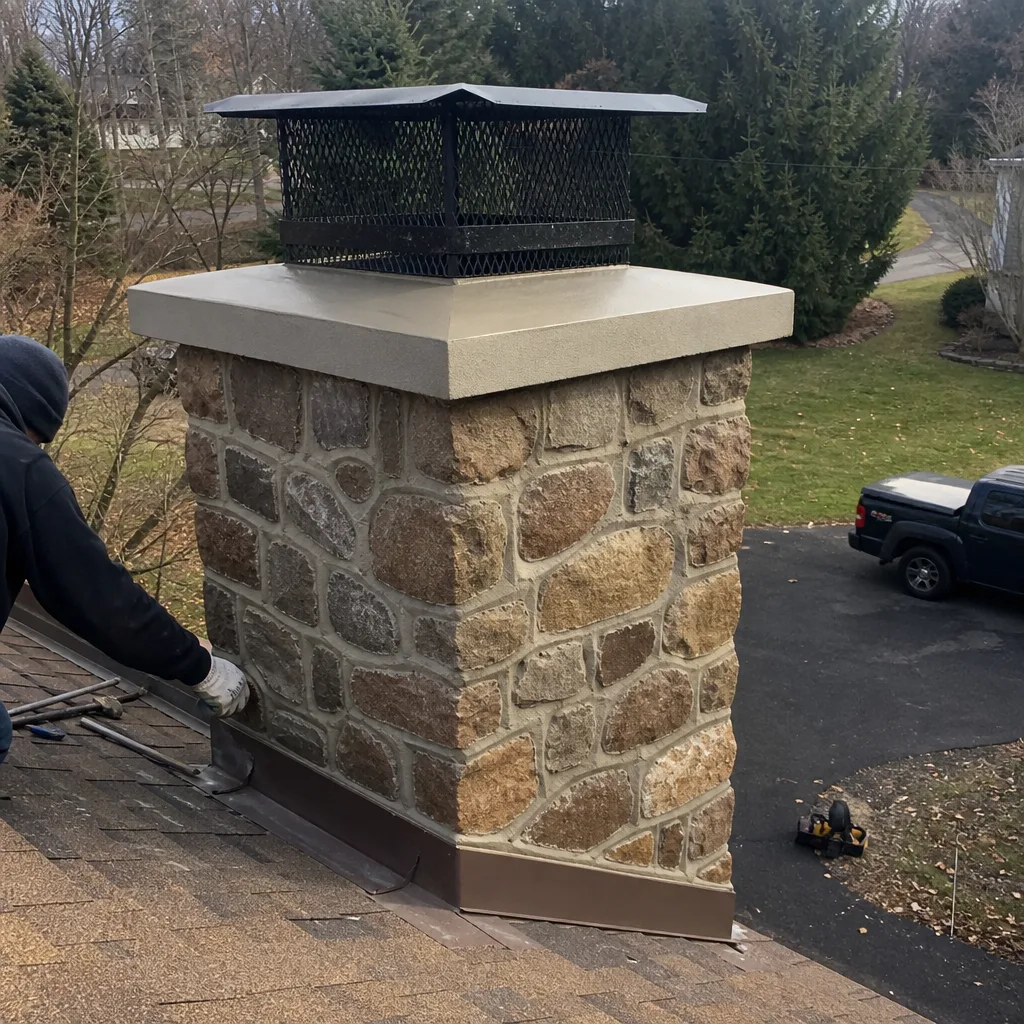 After
AfterChimney Cleaning & Sweep Maintenance Checklist for Northampton Homeowners
Most chimney problems don’t announce themselves with a bang. They start as a hairline crack in the crown or a damper that sticks half an inch from closed, and they sit there quietly for two or three seasons while moisture works its way into places it shouldn’t be. The good news is that a homeowner in Northampton with a flashlight, a ladder, and about twenty minutes can spot the two most common problems before they turn into a four-figure repair. This guide walks you through exactly what to check, when to check it, and what needs a licensed sweep’s hands instead of yours. For a deeper dive, see our Complete Guide to Chimney Cleaning in Northampton.
Quick Answer
A chimney cleaning and maintenance checklist for Northampton homeowners comes down to this: inspect your firebox and damper monthly during burn season, check your crown and cap from the roofline twice a year, and book Chimney Cleaning & Sweep services at least once per year if you burn regularly – more often if you burn three or more cords. The non-negotiable items are the crown, the cap, the damper, and the flue liner, and in Northampton’s freeze-thaw climate, the crown is the one that fails first.
Table of Contents
- What You Can Safely Check Yourself
- What a Licensed Sweep Must Handle
- Why Northampton’s Freeze-Thaw Cycle Is Harder on Chimneys
- Keeping a Chimney Log: What to Write Down and Why
- How Often Should You Actually Sweep? (It Depends on Your Burn Habits)
- The Season-by-Season Checklist
- Common Mistakes to Avoid
- When to Call a Professional
- Frequently Asked Questions
- The Bottom Line
What You Can Safely Check Yourself
You don’t need to climb onto a roof to catch most problems early. Some of the most useful checks happen from the ground, from inside your living room, and from the firebox itself. Here’s what to look at, starting with the easiest and safest spots.
From the Ground
Stand in your yard with a pair of binoculars, or walk up close if you have a clear sightline. Look at the chimney from three sides if you can. You’re checking for:
- Leaning or bowing. A chimney that’s drifted even an inch off plumb is telling you the mortar joints or the footing are failing. In Northampton, where older homes still carry their original masonry, this shows up more often than people expect.
- White staining (efflorescence). That chalky white residue on the brick is salt left behind when water wicks through the masonry and evaporates. It means water is getting in. It’s not cosmetic.
- Missing or rusty cap. If the metal cap on top is rusted through or gone, rain and snow have a direct path down the flue. You’ll usually see staining on the crown below it.
- Spalling brick. If the faces of the bricks are flaking off or the brick edges look rounded instead of sharp, the bricks are absorbing water and freezing. This is the classic Northampton failure pattern.
Inside the Firebox
Get down in front of the fireplace with a flashlight. Open the damper if you can – if it won’t open or is jammed, that’s a finding to write down. Look up into the firebox and note:
- Creosote buildup. Shine the light up as far as you can see. First-degree creosote looks like soot – powdery and black. Second-degree looks like crunchy flakes or granules. Third-degree looks like a shiny, tar-like glaze that drips down the flue walls. First-degree is a brush job. Third-degree is a glaze, and it needs chemical or mechanical removal, not a standard sweep.
- Damper condition. The damper should open and close with resistance but not struggle. If it’s rusted, warped, or won’t seat fully closed, you’re paying to heat the neighborhood all winter and giving moisture a highway in summer.
- Loose firebrick. The firebricks lining the firebox should sit flush and solid. If any are cracked, crumbling, or moved, they need replacing before the next fire.
For a full professional sweep in Northampton, visit our Chimney Cleaning & Sweep in Northampton page to see what a standard cleaning includes.
From the Roofline (Only If You’re Comfortable on a Ladder)
If you own a ladder tall enough to get your eyes level with the crown, and you trust your footing, this is the most valuable inspection you can do. If you’re not steady on a ladder, skip it and call someone who is. Here’s what you’re looking for:
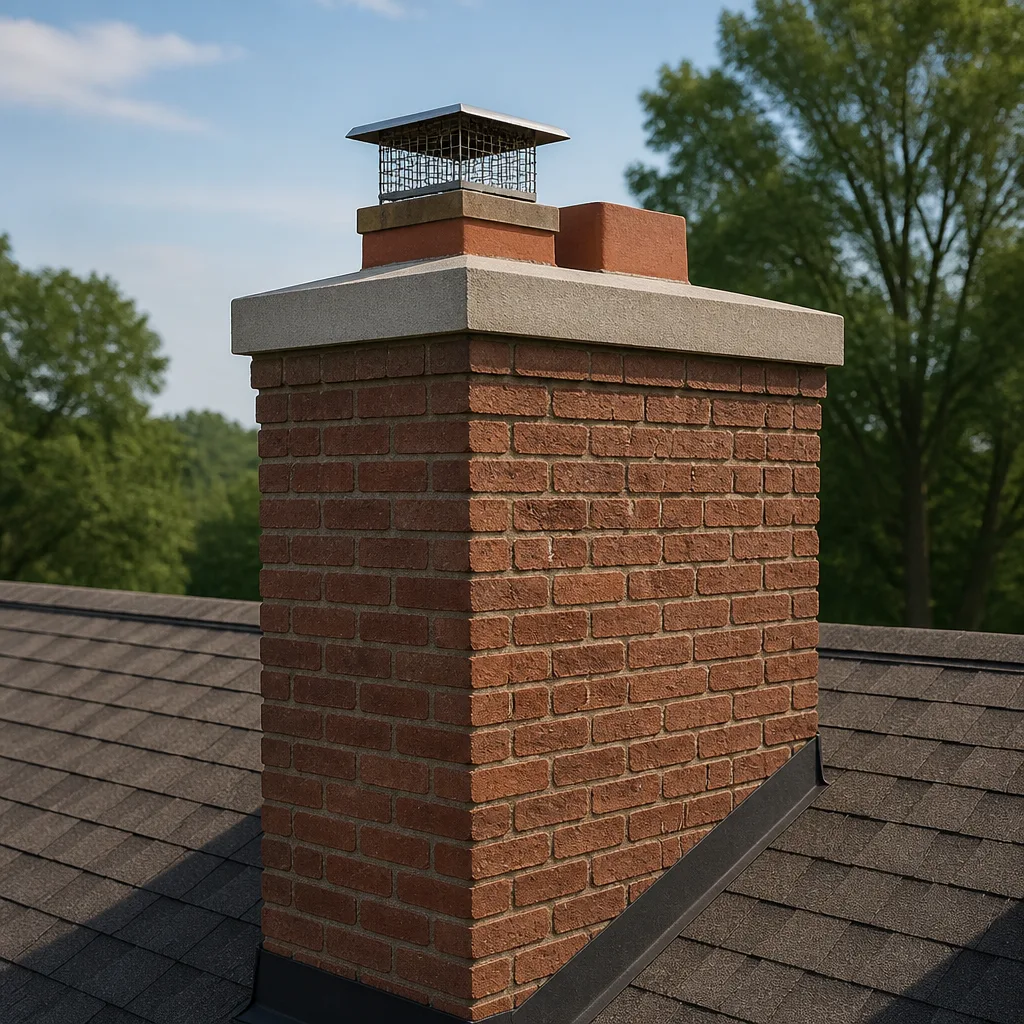
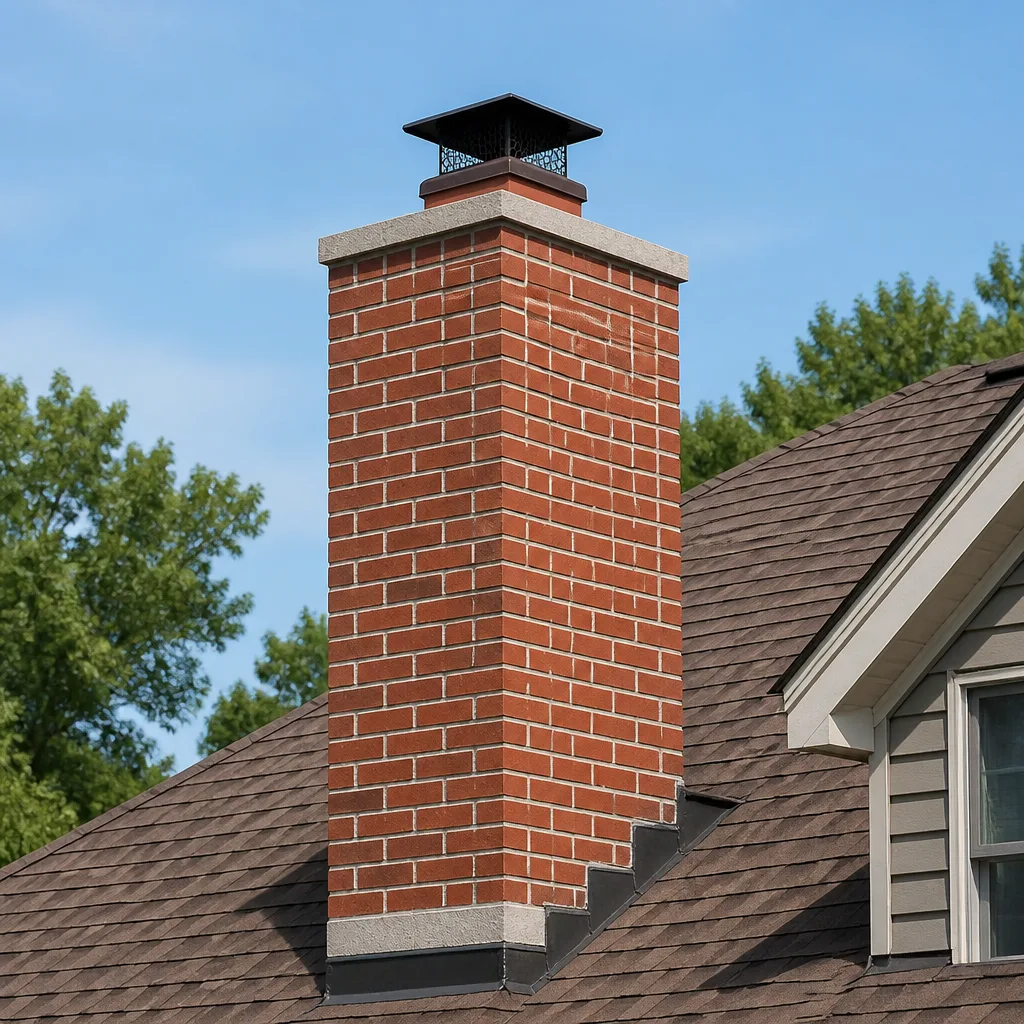
- Cracks in the crown. The crown is the concrete slab that caps the top of the chimney. A healthy crown is smooth, sloped outward slightly, and crack-free. Hairline cracks are early warning. Cracks wider than a nickel mean water has been getting in for a while.
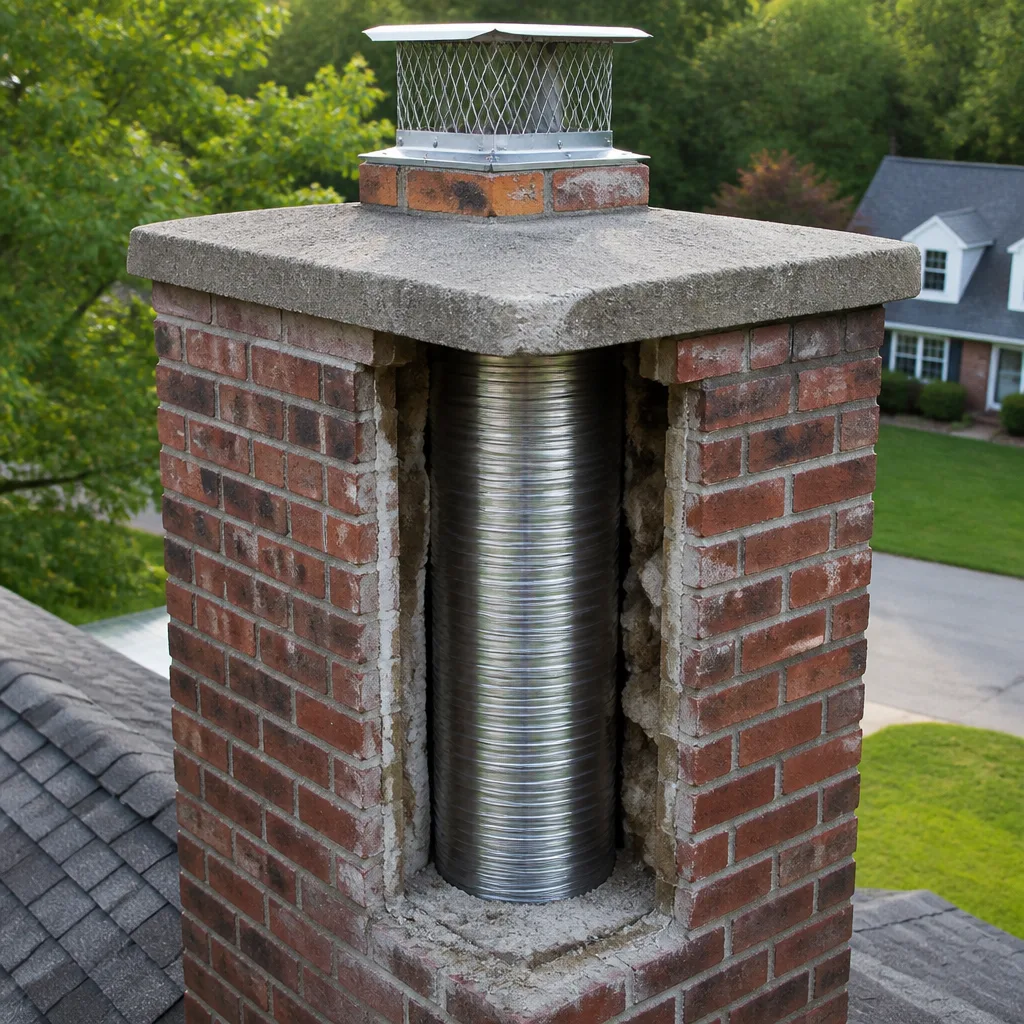
- Gaps at the flue liner. The clay or metal liner should sit proud of the crown by a couple of inches, with the gap between liner and crown sealed. If you can see daylight between them, water is pooling around the liner joint.
- Damaged cap or missing spark arrestor. The cap should sit level and secure. If the mesh screen around it is torn or the cap is dented from a falling branch, animals and rain both get in.
If you spot anything suspicious, don’t poke at it. Our Chimney Repair in Northampton page covers what a cracked crown or damaged cap looks like and what fixing it entails.
What a Licensed Sweep Must Handle
Some jobs on any chimney checklist require the right tools, the right PPE, and the right training. Attempting them without that combination usually causes more damage than it prevents. Here’s what should always go to a licensed professional.
Flue cleaning above the smoke shelf. You can inspect the firebox and the first few feet of the flue from inside. You cannot clean the full run of it without a proper wire brush set, a vacuum with a HEPA filter, and a set of drop cloths. A chimney sweep’s brushes are sized to the flue dimensions – too stiff a brush on a clay liner or too aggressive a rotation can crack the liner and scatter creosote everywhere.
Third-degree creosote removal. Once creosote glazes, a brush won’t touch it. Removing glazed creosote requires chemical treatments, rotary loop systems, or in severe cases mechanical scraping with special tools. This is not a DIY job, and attempting it with a hardware-store brush just polishes the surface of a fire hazard.
Liner inspection and repair. The only way to know if your flue liner is intact is a camera inspection. A chimney sweep will run a camera down the flue and walk you through the footage in plain English. We use trusted brands like DuraFlex and Olympia Chimney when a liner needs rebuilding or resurfacing, and the camera footage tells us whether that’s needed – or whether the liner still has good years left. You should never accept a liner replacement recommendation without seeing the footage yourself.
Crown repair and replacement. A cracked crown needs more than caulk. Proper repair means cleaning out the crack, filling it with the right masonry compound, or in many cases pouring a new crown with the correct slope and expansion gap. Getting this wrong means water keeps getting in and the cracks come back within a season or two.
Any work requiring a code permit. Northampton borough and surrounding townships enforce building code for significant chimney repairs, liner replacements, and rebuilds. A licensed sweep knows what requires a permit and what doesn’t, and the work gets done to code rather than done twice.
Why Northampton’s Freeze-Thaw Cycle Is Harder on Chimneys
Northampton sits in a climate band that punishes masonry more than most. We get real winters – sustained freezing temperatures, snow that sits on rooflines, and warm daytime thaws. That cycle is exactly what destroys chimney crowns and mortar joints.
Here’s how it works. Brick and mortar are porous. They absorb water from rain and snow melt. When the temperature drops below freezing, that water expands by about nine percent as it turns to ice. The expansion pushes apart whatever is holding it – the mortar joint, the hairline crack in the crown, the tiny gap around the flue liner. Then the thaw comes, the ice melts, and the crack closes back up. But it’s a little wider than it was before. Next freeze, it widens again.
After thirty or forty freeze-thaw cycles in a Northampton winter, a hairline crown crack becomes a quarter-inch gap. That’s not theoretical – it’s what we see on chimneys all over the borough every spring. Homes in Lehigh Valley communities with similar masonry, but in climates without the hard freeze, don’t fail at the same rate.
This is why the crown is the single most important thing to inspect on your checklist. It’s the roof of your chimney. When it fails, everything below it – the brick, the mortar, the liner, the damper – starts degrading faster. In Northampton, catching a crown crack in its first winter often means a $300 repair. Catching it three winters later means rebuilding the top two feet of the chimney.
If your chimney is showing freeze-thaw damage, our Top Hat Chimney home page explains how we work and what’s included on every job.
Keeping a Chimney Log: What to Write Down and Why
Most homeowners can’t tell you when their chimney was last swept. When it’s time to sell the house or file an insurance claim, that’s a problem. A simple chimney log solves it, and it takes about two minutes per entry.
Keep a notebook or a note on your phone. Every time you do anything chimney-related – a sweep, a repair, a check from the roofline, a new cap – write down:
- The date. Month and year at minimum.
- What was done. “Swept,” “crown repaired,” “new cap installed,” “inspected from roofline.”
- Who did it. If a contractor, write the company name and the name of the person who came out. You want the person-level record, not just a company name.
- What they found. “Second-degree creosote in upper third,” “hairline crack in crown, left as-is,” “liner looks good, no gaps.”
- What they recommended and the cost, if any.
Five lines, once or twice a year. That log pays for itself when:
- You sell the house. A buyer’s inspector will ask about the chimney. A log with dates and findings reads as “this owner maintained the house,” and it often keeps a sale from stalling over an unknown flue.
- You file an insurance claim. If a storm drops a limb on your chimney or water damage traces back to a failed cap, the log shows you maintained the system. Insurance companies like documentation.
- You notice a change over time. A log entry from 2022 that says “minor efflorescence” and a 2025 entry that says “efflorescence spreading, bricks flaking” tells you the problem is active and needs work now, not later.
There’s no right format. A spiral notebook on the utility shelf works fine. The point is that the information exists when you need it.
How Often Should You Actually Sweep? (It Depends on Your Burn Habits)
The standard advice is “sweep your chimney once a year.” That’s a decent starting point, but it’s not the right schedule for everyone. The real answer depends on how much you burn and what you burn.
Here’s a practical breakdown for Northampton households:
| Burn Pattern | Typical Season | Recommended Sweep Schedule |
|---|---|---|
| Occasional use (a fire at Christmas, maybe a few weekends) | Under 1/2 cord per year | Every 12-18 months. The risk here is rarely creosote volume – it’s moisture, bird nests, and gradual crown deterioration during the off-season. |
| Regular use (weekend fires, a few evenings per week in winter) | 1/2 to 2 cords per year | Every 12 months, before burn season. This is the “once a year, burn or no burn” rule applied to normal use. |
| Heavy use (fires most nights, heating a significant part of the home) | 2 to 4 cords per year | Every 6 months. Heavy burners build creosote quickly, especially in a stove or insert where the fire often burns slower and cooler. |
| Primary heat (the wood stove or fireplace runs most of the winter) | 4+ cords per year | Every 3-4 months during burn season. Some heavy burners get swept at the start of the season, at mid-season, and at the end. It’s cheap insurance compared to a chimney fire. |
What you burn matters as much as how much. Seasoned hardwood (oak, maple, hickory, and similar split for at least a year) burns hotter and produces less creosote than green wood or softwoods like pine. Wet wood smolders at a lower temperature, which means more unburned particulates going up the flue and condensing on the liner. If you’re buying wood by the cord in Northampton, ask for seasoned and verify by knocking two splits together – seasoned wood rings; green wood thuds.
Your flue doesn’t care how the fire looks. It cares how it breathes. A chimney that’s breathing properly, with dry wood and a good draft, builds creosote slowly and evenly enough that an annual sweep handles it. A chimney that’s burning wet wood with a sluggish draft builds up glaze in months, and that’s when you get the third-degree creosote that a brush can’t remove.
For a deeper look at what a professional cleaning covers and what we find in Northampton flues, see our Chimney Cleaning & Sweep service page.
The Season-by-Season Checklist
Here’s the full maintenance plan, organized by season. Print this, tuck it in your chimney log, and run through it when each season turns.
Spring (After Burn Season Ends)
- Book your annual sweep. After the last fire of the season is the ideal time. The creosote from winter sits in the flue, and spring moisture makes it more corrosive. Plus, you’ll have all summer to address any findings before you need the fireplace again.
- Close the damper. If your damper seats properly, close it after the sweep to keep moist summer air from drafting up the chimney and bringing rainwater odors into the house.
- Inspect the firebox from your knees. Look for loose firebrick, crumbling mortar, or rust around the damper frame.
- Check the ground-level exterior. Walk around and look for spalling brick or efflorescence on the lower chimney walls.
- Write everything in your log.
Summer (The Inspection Season)
- Get eyes on the crown. Summer is the best time to inspect from a ladder – dry surface, no ice, good light. Check for cracks, gaps around the liner, cap condition.
- Check for animal activity. Birds, squirrels, and raccoons nest in uncapped or poorly capped chimneys. Listen for noises, look for nesting material around the cap, and check the firebox for droppings.
- Schedule any repairs found in spring. Chimney work waits well in summer. Masonry needs dry weather and temps above 40°F, so don’t push crown or mortar repairs into fall and expect them to cure properly.
- Inspect the flashing. Where the chimney meets the roofline, check that the metal flashing is intact and sealed. Rusted flashing is a leak waiting for the next downpour.
Fall (Before the First Fire)
- Open the damper before you light anything. Every year, someone in Northampton fills their living room with smoke because the damper was painted shut, rusted shut, or simply forgotten. Check it first.
- Test the cap from the ground. Make sure the cap is still in place and the spark arrestor mesh is intact.
- Order or split your wood. If you burn wood, now is when you confirm your cord is seasoned and stacked with airflow. Wet wood in November is the single biggest cause of heavy creosote in Northampton fireplaces we see each winter.
- Run a smoke test. Light a rolled-up newspaper and hold it up into the open flue. Smoke should be drawn up immediately. If it puffs back into the room, you have a draft problem – often a clogged flue, a failing chimney cap, or a negative pressure issue in the house.
- Confirm your sweep is booked. If you didn’t sweep in spring, fall is the backup. Everyone in Northampton calls in October. Book in September and you’ll get the date you want.
Winter (In Season)
- Burn seasoned hardwood only. If you’re buying wood mid-season, don’t buy green. It’ll cost you more in the long run.
- Watch for smoke entering the room. Any smoke backdrafting is a sign the flue is obstructed or the draft is failing. Stop burning until you know why.
- Listen for popping or crackling above the normal fire sound. A chimney fire often sounds like a freight train or loud popping in the flue. If you hear it, close the damper, close the stove door, get everyone out, and call the fire department. After the fire is out, don’t use the fireplace again until a licensed sweep inspects it.
- Check the damper when the fire is out. It should close cleanly. If it’s sticky from creosote buildup, write a note in the log and mention it at the next sweep.
Common Mistakes to Avoid
- Skipping the sweep because you “didn’t burn much” this year. Chimneys break in the off-season too. Moisture, animals, and crown deterioration don’t care whether you used the fireplace. Once a year, burn or no burn.
- Burning green wood to save money. Green wood costs you more in creosote buildup than you ever save on the cord price. Seasoned hardwood burns hotter and cleaner, and it means fewer sweeps per season.
- Caulking a cracked crown with silicone from the hardware store. It won’t hold. Crown repair needs masonry-specific material and the right preparation, or the crack comes back wider than before.
- Ignoring efflorescence because it’s “just cosmetic.” White staining on the brick means water is traveling through the masonry. That’s structural. It’s the earliest visible sign of freeze-thaw damage in Northampton.
- Waiting until October to book a sweep. Every sweep in Northampton County is booked solid by the second week of October. Book in spring or late summer and you’ll get your preferred date.
- Not keeping a log. Three years from now, you won’t remember whether the crown was cracked or when the last sweep happened. Write it down.
- Painting shut or removing the damper yourself. A damper that won’t operate properly needs assessment, not force. Rusted dampers usually need replacement, and removing one improperly can damage the firebox surround.
When to Call a Professional
Call a licensed sweep if you see: a cracked or crumbling crown, bricks flaking or spalling, water staining on the ceiling near the chimney, smoke backdrafting into the room, an animal in the flue, or glazed creosote (shiny and tar-like) inside the firebox. If you haven’t had the flue camera-inspected in five years or more, that’s also a call. And if you smell something smoky or musty in the house when the fireplace hasn’t been used in months, there’s a moisture or creosote issue worth a professional look.
Top Hat Chimney offers free estimates in Northampton – call (484) 859-1367 and the number you hear on the phone is the number on the invoice. We’ve been serving Northampton and the surrounding communities since 1999, and every job is backed in writing by our 90-Day Done Right Promise.
Frequently Asked Questions
A standard chimney sweep and inspection in Northampton typically runs between $150 and $300 depending on the flue size, the level of creosote, and whether it’s a fireplace or a wood stove. The price you’re quoted on the phone is the price you pay – no upcharge after the work begins. Call (484) 859-1367 for a free estimate.
Most Northampton homeowners should have a professional sweep once per year, scheduled in spring or late summer. If you burn more than two cords of wood per season, sweep every six months. If you only light the fireplace a few times a year, every 12 to 18 months is usually sufficient.
You can safely inspect your firebox, damper, and exterior masonry yourself. You cannot safely clean the full flue run with consumer tools – the risk of incomplete creosote removal and the mess involved make it a job for a licensed sweep with the right brushes and HEPA vacuum. Attempting it with a hardware-store brush often leaves glazed creosote behind and gives a false sense of safety.
Look for cracks wider than a hairline, crumbling concrete at the edges of the crown, or gaps between the crown and the flue liner. In Northampton’s freeze-thaw climate, even hairline cracks widen over a single winter if left alone. If you can see light through a crack or fit a coin in it, the crown needs professional repair.
Not necessarily. A flue liner can look intact from the top and still have cracks or gaps lower down that only a camera inspection reveals. Never accept a liner replacement recommendation without seeing the camera footage yourself. If the footage shows the liner is intact, you don’t need a new one. If it shows gaps, cracks, or spalling, then a liner replacement using a trusted system like DuraFlex or Olympia Chimney is the right call – and the footage proves it.
Creosote keeps building. First-degree creosote becomes second-degree, then third-degree glaze. The risk of a chimney fire rises significantly with third-degree creosote, because glaze is highly combustible and burns at temperatures that can crack flue liners and spread to the structure. You’re also more likely to miss a crack in the crown or a damaged cap without the regular inspection that comes with a sweep. Call (484) 859-1367 to schedule a cleaning and see where your chimney actually stands.
The Bottom Line
A chimney maintenance checklist only works if it sends you to look at the right things. Check the firebox and damper monthly during burn season. Check the crown and cap from the roofline in spring and fall. Book a sweep once a year, or twice if you burn heavily. Write everything down. For more guides & resources, browse our blog. And when you see something that doesn’t look right – a crack, a stain, a damper that won’t close – don’t guess. Call a licensed sweep in Northampton and find out what you’re actually dealing with. It’s almost always cheaper to check than to rebuild.
For fireplace maintenance and repairs beyond the chimney, see our Fireplace Services in Northampton page for what’s covered and what a standard service visit includes.
Written by Wendell Pike, Owner at Top Hat Chimney, serving Northampton since 1999.